



What's Happening?
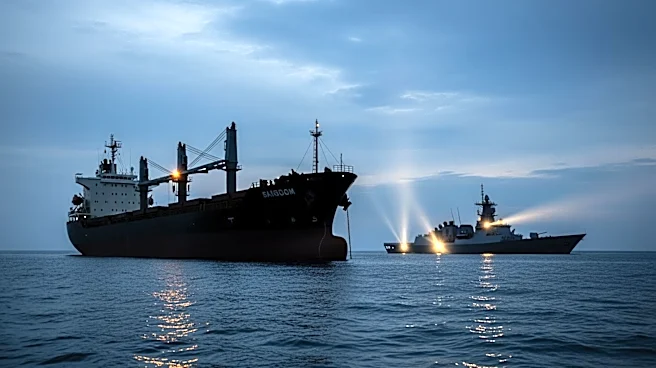
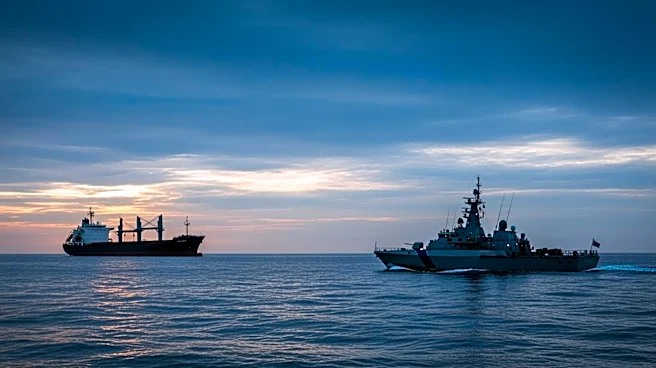
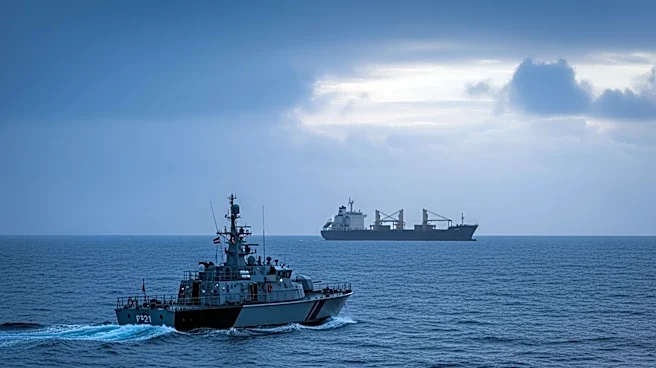
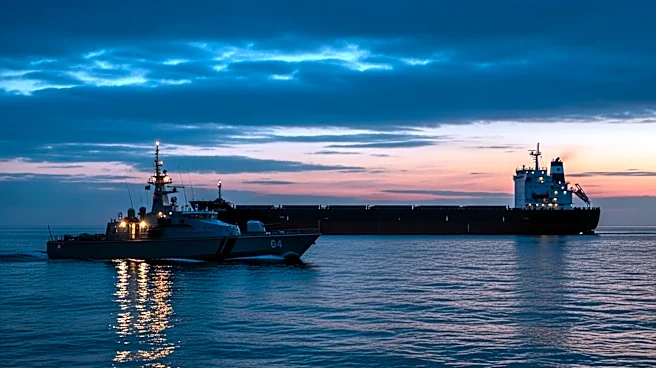
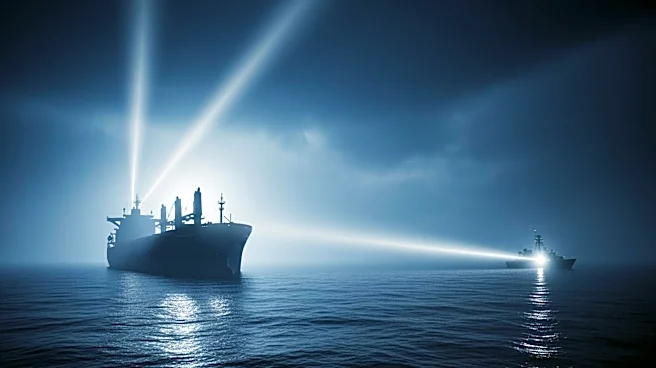
US Marines have taken control of an Iranian-flagged vessel, the Touska, in the Gulf of Oman as part of President Trump's blockade on Iran. The operation, captured in dramatic video footage, involved Marines rappelling from a helicopter onto the ship after
the USS Spruance disabled its propulsion. The Touska was attempting to breach the US blockade, which was established to prevent Iranian ships from moving through the Arabian Sea. This marks the first instance of the US seizing an Iranian tanker since the blockade's implementation. The blockade and subsequent seizure have heightened tensions between the US and Iran, with Iran condemning the action as a violation of a cease-fire.
Why It's Important?
The enforcement of the blockade and the seizure of the Iranian vessel underscore the escalating tensions between the US and Iran. This action could have significant geopolitical implications, potentially affecting global oil prices and international relations. The blockade aims to exert pressure on Iran by restricting its maritime activities, but it also risks provoking further conflict in the region. The incident highlights the strategic importance of the Strait of Hormuz, a critical chokepoint for global oil shipments. The US's assertive stance may influence its diplomatic relations with other countries in the region and could lead to broader international repercussions.
What's Next?
As the situation develops, the US and Iran are likely to engage in further diplomatic and military maneuvers. The expiration of the cease-fire on Wednesday could lead to increased hostilities if no resolution is reached. The international community may call for negotiations to de-escalate tensions and ensure the free flow of maritime traffic through the Strait of Hormuz. The US's actions may also prompt responses from other global powers, potentially leading to a reevaluation of alliances and strategies in the Middle East.