





What's Happening?
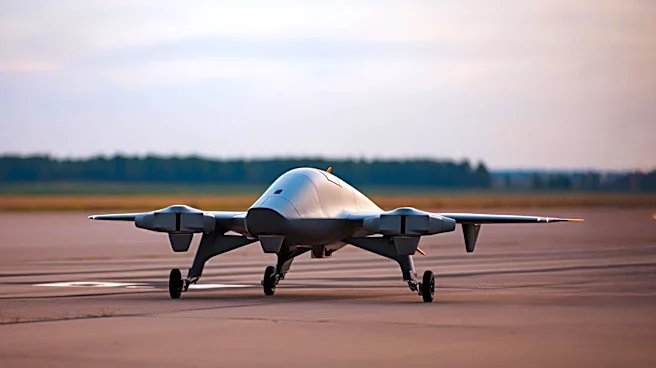
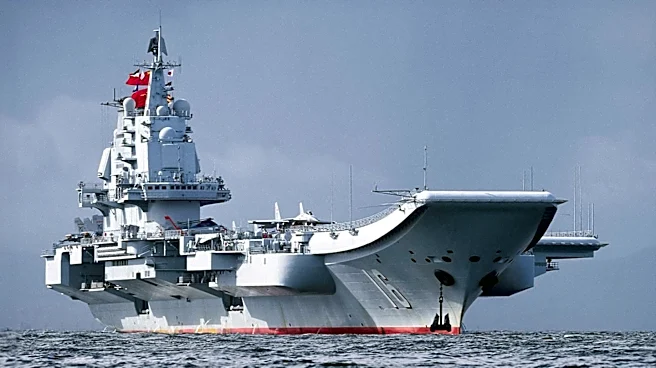
Taiwan's defense ministry has reported continued unannounced military activity by China's People's Liberation Army (PLA) near its territory. Between Thursday and Friday morning, 30 Chinese warplanes were detected operating near Taiwan, with 23 of these
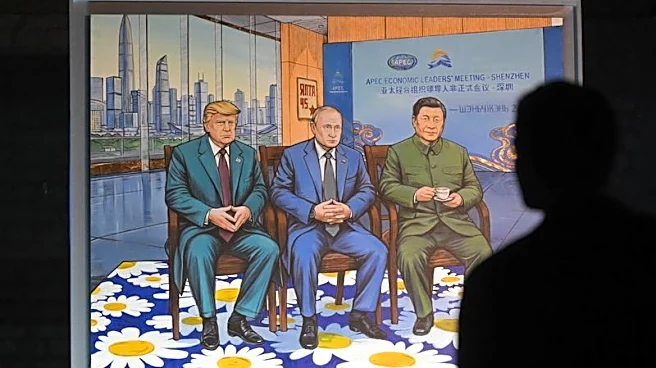
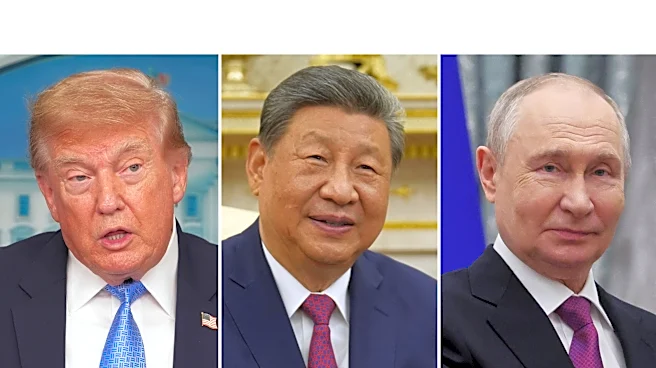
aircraft approaching closer to Taiwan's main island. This surge in activity comes as China prepares to host world leaders at the APEC summit in Shenzhen next week. A U.S.-based think tank suggests that China may be attempting to normalize large, unannounced military deployments in the Taiwan Strait. Analysts are closely watching whether these operations will continue after the APEC summit, as sustained activity could indicate a long-term strategic focus on regional military deployments and planning by Beijing.
Why It's Important?
The increased and unannounced PLA military deployments near Taiwan are significant as they escalate tensions in the Indo-Pacific region and pose a direct challenge to regional stability. Such actions could be interpreted as a coercive tactic by Beijing to assert its territorial claims over Taiwan, potentially undermining international norms regarding freedom of navigation and overflight. For the United States, a key ally of Taiwan, these developments raise concerns about regional security and the potential for miscalculation or accidental escalation. The normalization of such deployments could also force Taiwan to expend more resources on defense and readiness, impacting its economy and societal focus. Furthermore, it signals China's growing military assertiveness and its willingness to use military pressure to achieve its geopolitical objectives, which could have broader implications for U.S. alliances and strategic interests in Asia.
What's Next?
The immediate focus will be on China's military activities during and after the upcoming APEC summit in Shenzhen. Observers will be looking for any continuation or escalation of these unannounced deployments, which could signal a more permanent shift in China's strategy towards Taiwan. Taiwan's defense ministry is expected to maintain heightened vigilance and continue to monitor PLA movements, likely issuing further reports on any significant developments. The international community, particularly the United States and its allies, will likely issue statements of concern and may consider diplomatic or strategic responses to deter further aggressive actions. The U.S.-based think tank's assessment suggests that if these deployments become a 'new normal,' it could necessitate a re-evaluation of defense strategies and alliances in the region.
Beyond the Headlines
The unannounced PLA deployments highlight a deeper strategic shift in China's approach to Taiwan, moving beyond rhetoric to more overt military posturing. This could be part of a long-term strategy to test Taiwan's defenses, gather intelligence, and gradually erode the status quo in the Taiwan Strait. Ethically, these actions raise questions about international sovereignty and the right of self-determination for Taiwan. Legally, they challenge the principles of peaceful resolution of disputes and could be seen as a violation of international airspace and maritime norms. Culturally, such military pressure can foster a sense of siege in Taiwan, potentially influencing public opinion and political discourse regarding its relationship with mainland China. The long-term implication is a potential arms race in the region and increased militarization, which could destabilize global trade routes and economic partnerships.