








What's Happening?
The Galápagos Islands, known as the 'laboratory of evolution,' continue to captivate scientists and tourists alike with their unique biodiversity. Charles Darwin's visit in 1835 played a pivotal role in the development of his theory of evolution. The islands'
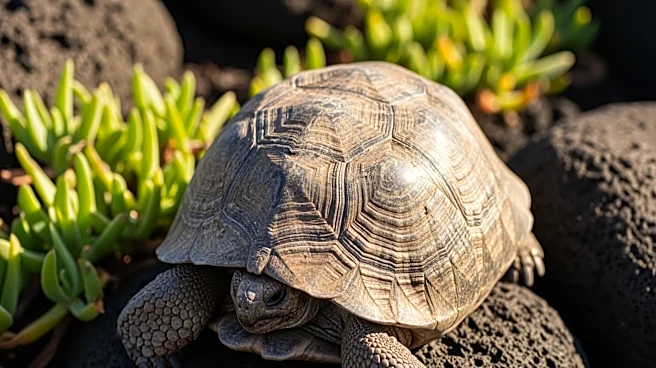
isolation has led to the evolution of distinct species, such as the giant tortoises and finches, which were crucial to Darwin's studies. Today, the Galápagos face challenges from tourism and invasive species, prompting conservation efforts to preserve their natural heritage. The Charles Darwin Research Station plays a key role in these efforts, focusing on species like the giant tortoise and the invasive blackberry plant.
Why It's Important?
The Galápagos Islands serve as a living testament to the principles of natural selection and evolution, concepts that have fundamentally shaped biological sciences. The ongoing conservation efforts highlight the delicate balance between human activity and environmental preservation. The islands' unique species are not only of scientific interest but also contribute to Ecuador's economy through tourism. However, the influx of visitors poses a threat to the fragile ecosystem, necessitating strict regulations and conservation strategies. The story of the Galápagos underscores the importance of sustainable tourism and the global responsibility to protect natural wonders.
What's Next?
Conservationists continue to battle invasive species and manage the impact of tourism on the Galápagos Islands. The Charles Darwin Research Station is exploring biocontrol methods to manage invasive species like the blackberry plant. Efforts to educate tourists and enforce strict environmental regulations are ongoing to ensure the islands' ecosystems remain intact. The success of these initiatives could serve as a model for other regions facing similar ecological challenges. The future of the Galápagos depends on balancing human interests with the preservation of its unique biodiversity.