








What's Happening?
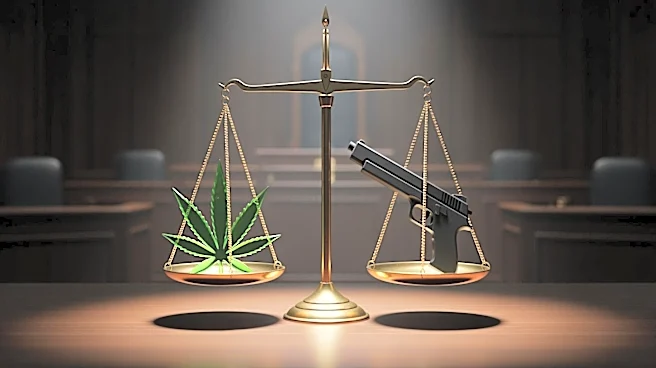
The Supreme Court has ruled that regular marijuana use is not sufficient grounds to criminally charge individuals for gun ownership, thereby loosening federal restrictions under the Gun Control Act of 1968. This decision stems from a case involving a Texas
man, Ali Hemani, who was charged with gun possession while being a regular marijuana user. The court's ruling emphasizes that the law cannot disarm individuals based solely on past substance use if they are sober at the time of gun possession. This decision aligns with the court's 2022 stance that gun laws must reflect the nation's historical tradition of firearm regulation.
Why It's Important?
This ruling has significant implications for gun rights and drug policy in the U.S., particularly as marijuana legalization continues to expand across states. By narrowing the scope of the Gun Control Act, the decision strengthens Second Amendment rights and challenges existing federal restrictions on gun ownership for marijuana users. This could lead to increased legal challenges and policy debates regarding the intersection of drug use and gun rights. The decision also reflects broader societal shifts towards the decriminalization of marijuana and the reevaluation of its legal status.
What's Next?
The ruling may prompt legislative and legal responses as stakeholders, including gun rights advocates and public safety groups, assess its impact. There could be calls for Congress to revisit the Gun Control Act to address the evolving legal landscape of marijuana use. Additionally, the decision may influence future court cases involving gun rights and substance use, potentially setting new legal precedents. Advocacy groups on both sides of the issue will likely continue to engage in public discourse and lobbying efforts to shape policy outcomes.