





What's Happening?
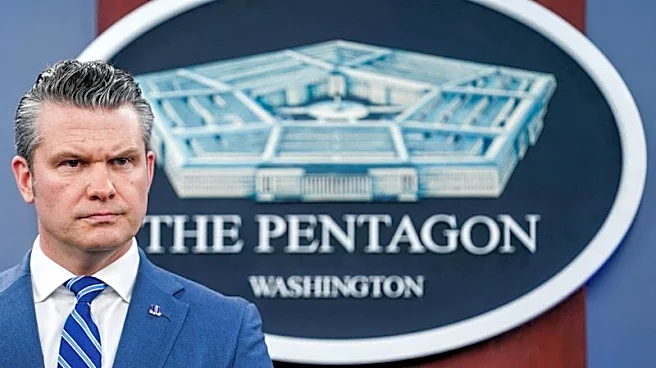
Defense Secretary Pete Hegseth has directed the termination of most collective bargaining agreements within the Department of Defense. This decision follows an executive order by President Trump, which bans federal employee unions from many agencies on national
security grounds. Hegseth's memo, issued on April 9, mandates the cancellation of union contracts within 24 hours, with some exceptions for specific bargaining units. The move has sparked criticism from union leaders, who argue that it undermines workers' rights and is not genuinely related to national security. The American Federation of Government Employees has condemned the action as a means to silence workers' voices.
Why It's Important?
The termination of union contracts affects a significant portion of the federal workforce, potentially altering labor relations within the government. This action could weaken the bargaining power of federal employees, impacting their working conditions and rights. The decision is part of a broader trend of reducing union influence in federal agencies, which could have long-term implications for labor-management relations. The move also raises questions about the balance between national security and workers' rights, as well as the role of unions in representing federal employees.
What's Next?
The termination of union contracts may lead to legal challenges and further disputes between the government and federal employee unions. Unions may seek to block the implementation of the executive order through court injunctions, as some have already done. The outcome of these legal battles could shape the future of labor relations in the federal government. Additionally, the decision may prompt discussions about the role of unions in the public sector and the impact of national security considerations on labor rights.