



What's Happening?
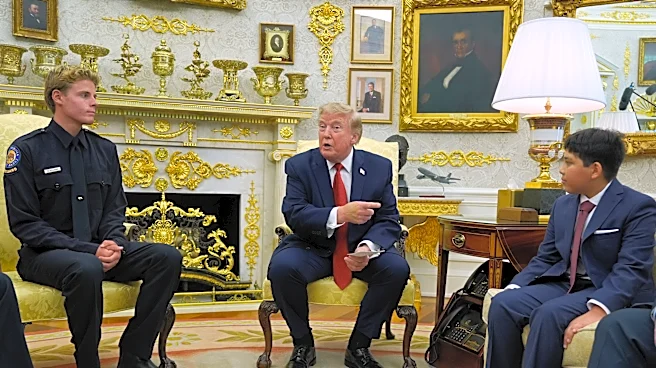
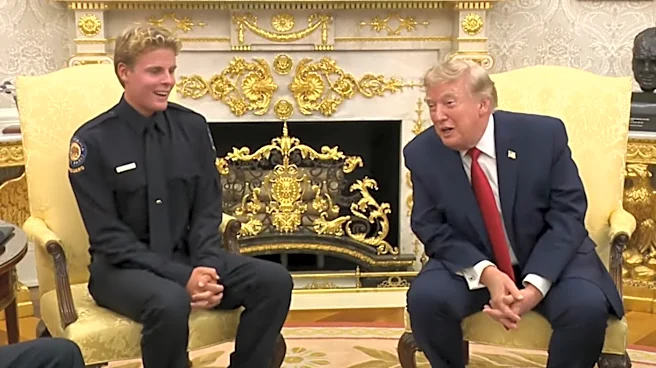
Letters to the Editor in the Los Angeles Times have drawn a stark contrast between the bravery of a young lifeguard, Ryder Williams, and remarks made by President Trump. Williams was honored for saving a 10-year-old boy, Nathaniel Rai, in Santa Cruz.
During the event, President Trump reportedly commented on Williams's heroism, stating, "He's a real hero. I don't know if I'd do it. I wouldn't, probably. You're lucky I wasn't on the service that day." The letters criticize President Trump's comments and his perceived lack of courage, juxtaposing it with the lifeguard's selfless act. One letter specifically highlights the perceived decline in the dignity of the Oval Office and criticizes President Trump's insults towards a female reporter during the same event.
Why It's Important?
This public commentary is important as it reflects a segment of public opinion regarding leadership, personal responsibility, and the perceived character of public figures. The comparison between a young individual's heroic act and a president's candid remarks touches upon societal values of courage, humility, and public service. For the political landscape, such criticisms can influence public perception of President Trump's leadership style and his administration's values, particularly in the context of upcoming elections. The discussion also extends to the role of the presidency as a symbol of national character and the expectations placed upon the officeholder. The letters suggest that President Trump's behavior and policies are seen by some as a departure from traditional American ideals of heroism and statesmanship.
What's Next?
While these are letters to the editor and not official policy statements, they contribute to the ongoing public discourse surrounding President Trump's presidency and his public image. Such sentiments often resonate with voters and can become talking points in political campaigns, particularly as midterm elections approach. The contrast drawn between individual heroism and presidential conduct may continue to be a theme in media commentary and public debate. Political leaders and campaigns may choose to either embrace or distance themselves from the sentiments expressed, depending on their strategic objectives. The incident serves as a reminder of how individual actions and words, especially from public figures, are scrutinized and interpreted by the populace.
Beyond the Headlines
Beyond the immediate political implications, this commentary delves into the cultural and ethical dimensions of leadership. It highlights a societal expectation for leaders to embody virtues such as courage and selflessness, and the disappointment that can arise when those expectations are perceived as unmet. The criticism of President Trump's remarks and the perceived 'opulence and decadence' of the Oval Office, as mentioned in one letter, also touch upon broader concerns about the erosion of traditional institutions and values. This incident, therefore, is not just about a specific event but reflects a deeper societal conversation about what constitutes admirable leadership and the moral compass of those in power, particularly in contrast to the actions of ordinary citizens who display extraordinary bravery.