


What's Happening?
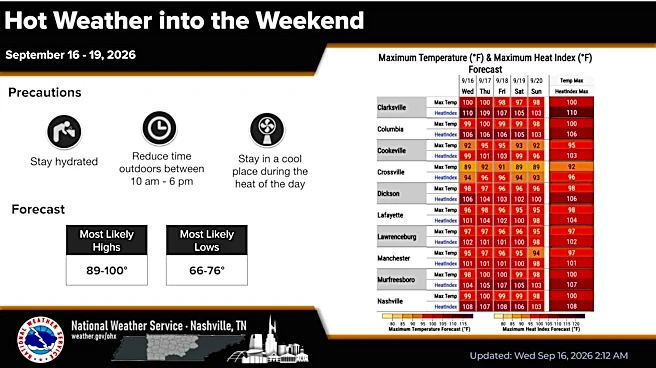
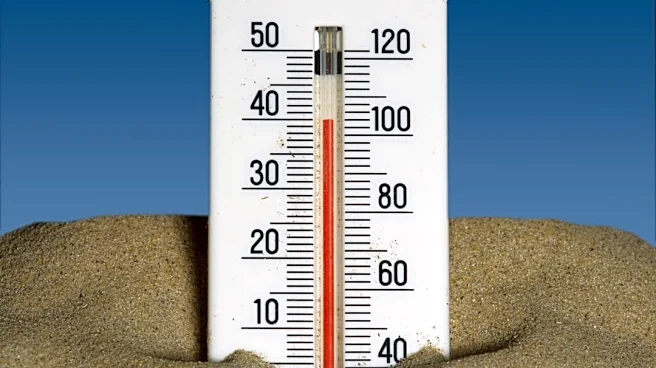
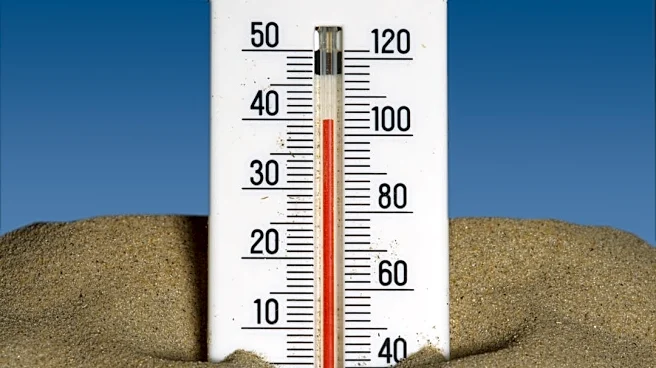
Nashville, Tennessee, is currently experiencing a dangerous heat wave, with a heat advisory in effect until Saturday evening. Temperatures are reaching the mid-90s, and with high dew points in the upper 60s, the heat index values are soaring to approximately
105 degrees Fahrenheit. This level of heat is considered brutal, especially for mid-September, as the average high for this time of year is typically between 85 and 86 degrees. The prolonged period of above-average temperatures and high humidity poses significant health risks to residents, particularly those who must work outdoors or lack access to air conditioning. The weather forecast indicates that these hot conditions will persist, with only slight chances of rain and no significant drop in temperatures expected in the immediate future.
Why It's Important?
The dangerous heat wave in Nashville carries significant implications for public health, local infrastructure, and daily life. High heat index values can lead to heat-related illnesses such as heat stroke and heat exhaustion, increasing the strain on emergency services and healthcare facilities. Vulnerable populations, including the elderly, young children, and individuals with pre-existing health conditions, are particularly at risk. The prolonged heat can also impact outdoor workers, potentially reducing productivity and posing safety concerns. Additionally, increased demand for air conditioning places a heavy load on the power grid, raising concerns about potential outages and higher energy costs for residents and businesses. This event underscores the growing challenges posed by extreme weather patterns and the need for effective public health advisories and mitigation strategies.
What's Next?
As the heat advisory continues, Nashville residents are urged to take precautions to stay safe. This includes staying hydrated, seeking air-conditioned environments, and avoiding strenuous outdoor activities during the hottest parts of the day. Local authorities and community organizations may activate cooling centers to provide relief for those without access to air conditioning. Utility companies will likely monitor the power grid closely to prevent outages and manage increased demand. Public health campaigns will continue to disseminate information on heat safety. Looking ahead, meteorologists will be tracking any potential shifts in weather patterns that could bring relief, though current forecasts suggest the above-average temperatures will persist for some time. The city may also review its emergency response protocols for extreme heat events.
Beyond the Headlines
This heat wave in Nashville highlights broader climate trends and their impact on urban environments. The occurrence of such extreme heat in mid-September, significantly later than typical summer peaks, suggests a shift in seasonal weather patterns. This phenomenon can lead to a reevaluation of urban planning, infrastructure resilience, and public health strategies to better adapt to a changing climate. Cities may need to invest more in green infrastructure, such as urban forests and cool pavements, to mitigate the urban heat island effect. There could also be increased discussions around long-term climate adaptation plans and resource allocation for managing extreme weather events, affecting everything from public services to insurance policies and agricultural practices in the region.