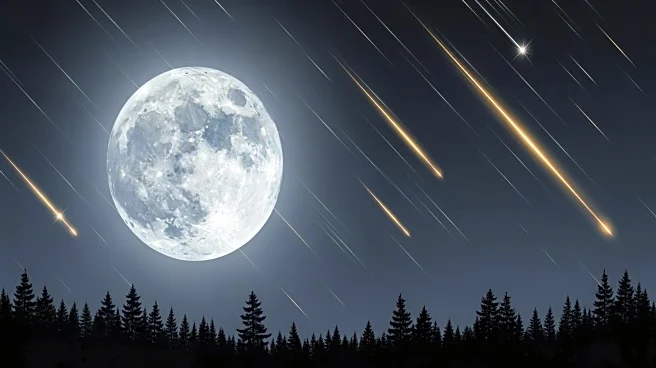




What's Happening?
The December 2025 full cold supermoon, the last supermoon of the year, is set to rise in the constellation Gemini, coinciding with the start of the Geminid meteor shower. This supermoon will appear larger and brighter due to its proximity to Earth, at approximately
221,965 miles away. The Geminid meteor shower, known for its bright and colorful meteors, will peak on the nights of December 13-14, offering a spectacular display visible across the Northern Hemisphere. The cold moon, also referred to as the long night moon, aligns with the winter solstice, marking the longest nights of the year.
Why It's Important?
The occurrence of a supermoon alongside a major meteor shower provides a unique opportunity for astronomical observation and public engagement with celestial events. Such events can inspire interest in astronomy and science education, encouraging people to learn more about the universe. The visibility of the supermoon and meteor shower can also boost tourism in areas with clear night skies, as enthusiasts travel to optimal viewing locations. Additionally, these events highlight the natural rhythms of the cosmos, fostering a sense of connection to the broader universe.
What's Next?
Following the December supermoon and Geminid meteor shower, skywatchers can look forward to the January wolf supermoon on January 3, 2026. This will be the final supermoon in a series of four consecutive supermoons. As the winter solstice approaches, daylight hours will begin to increase, leading to the spring equinox. Astronomers and enthusiasts will continue to monitor and document celestial events, contributing to ongoing research and public interest in space science.