

What's Happening?
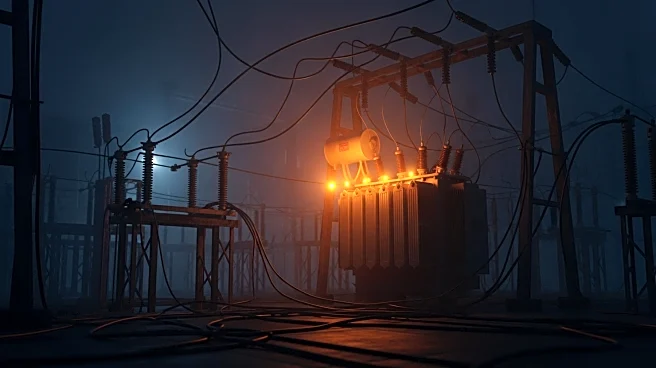
German federal prosecutors have initiated a terrorism investigation following an arson attack on high-voltage cables in Berlin, which resulted in a power blackout affecting approximately 45,000 households. The attack, claimed by a far-left extremist group
known as Vulkangruppe, targeted the fossil fuel economy as part of their protest against climate change. The incident has left about 24,700 households and 1,120 businesses still without power. Emergency services, supported by the military, have been providing assistance to affected residents, including offering warm accommodations and deploying public transport buses as temporary shelters. The Bundestag's interior committee is expected to receive a briefing on the attack, with authorities focusing on domestic left-wing extremism as the primary suspect.
Why It's Important?
The attack highlights the vulnerabilities in critical infrastructure and the potential for extremist groups to disrupt essential services. The incident underscores the ongoing threat of domestic terrorism and the challenges faced by authorities in safeguarding public utilities. The blackout has significant implications for public safety, particularly for vulnerable populations such as hospital patients and the elderly. The response by emergency services and the military demonstrates the need for robust contingency plans to mitigate the impact of such attacks. The investigation's outcome could influence future security measures and policies aimed at protecting critical infrastructure from similar threats.
What's Next?
Authorities are expected to continue their investigation into the attack, focusing on identifying and apprehending those responsible. The Bundestag's interior committee will likely discuss potential legislative or security measures to prevent future incidents. The ongoing power restoration efforts are anticipated to continue, with grid operator Stromnetz Berlin aiming to restore full electricity supply by Thursday. The incident may prompt a broader discussion on the security of energy infrastructure and the need for increased investment in protective measures.