

What's Happening?
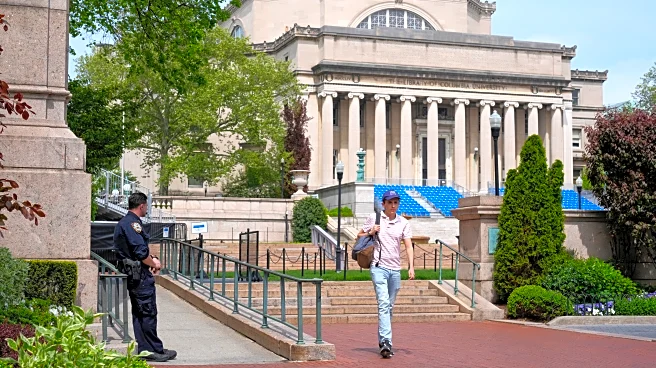
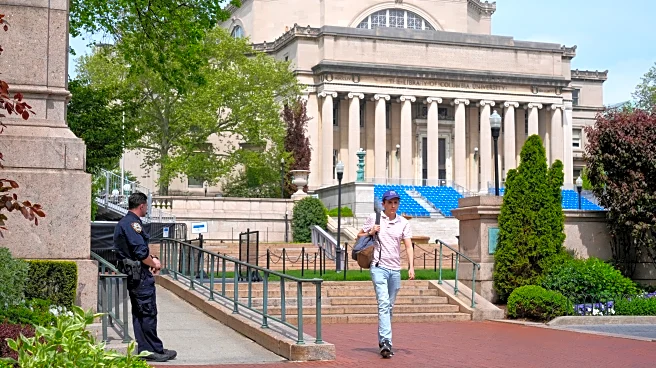
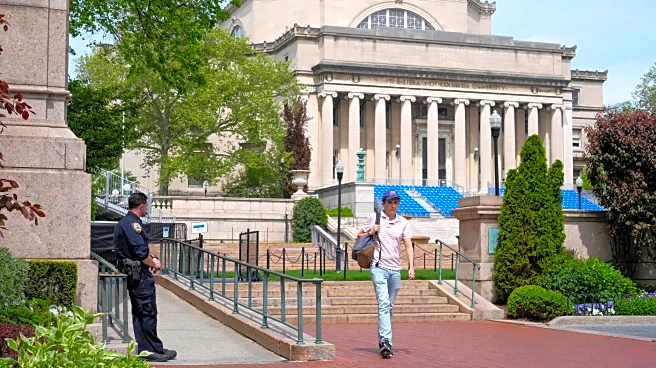
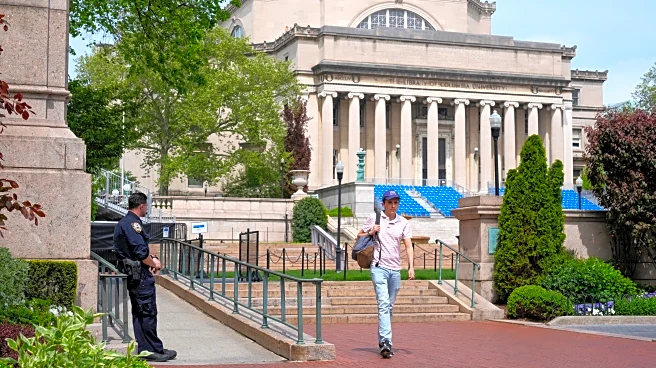
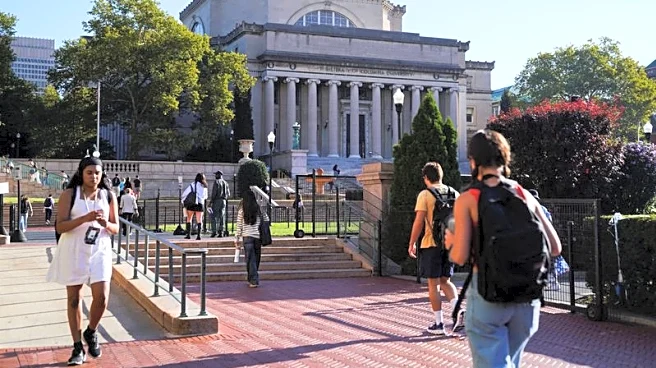
A Columbia University student, Ellie Aghayeva, was detained by federal immigration agents who allegedly used false pretenses to enter a campus residential building in New York City. The incident occurred at approximately 6:30 a.m. when agents from the
Department of Homeland Security (DHS) entered the building, claiming to search for a 'missing person.' Columbia University's Acting President Claire Shipman stated that the agents misrepresented their purpose to gain access. Aghayeva, an international student from Azerbaijan, was taken into custody due to her student visa being terminated in 2016 for failing to attend classes. The university is working to contact her family and ensure she has legal support. The incident has sparked outrage, with New York Governor Kathy Hochul proposing legislation to prevent Immigration and Customs Enforcement (ICE) from entering sensitive locations like schools without proper warrants.
Why It's Important?
This incident highlights significant concerns about the methods used by federal immigration agents and their impact on international students in the U.S. The use of deception to gain access to private university property raises questions about the balance between immigration enforcement and individual rights. The situation has drawn criticism from political leaders and civil rights advocates, emphasizing the need for clear legal protocols when accessing educational institutions. The case also underscores the vulnerability of international students, who may face legal and personal challenges due to visa issues. The broader implications include potential changes in policy regarding ICE operations and increased scrutiny of immigration enforcement practices on college campuses.
What's Next?
Following the incident, there may be increased advocacy for legislative changes to protect students and educational institutions from similar actions by federal agents. Columbia University and other institutions might review and strengthen their policies regarding law enforcement access to campus facilities. Political leaders and civil rights organizations are likely to continue pushing for transparency and accountability in immigration enforcement. The case could also lead to legal challenges or reforms aimed at ensuring that federal agents adhere to proper legal procedures when conducting operations in sensitive locations.