


What's Happening?
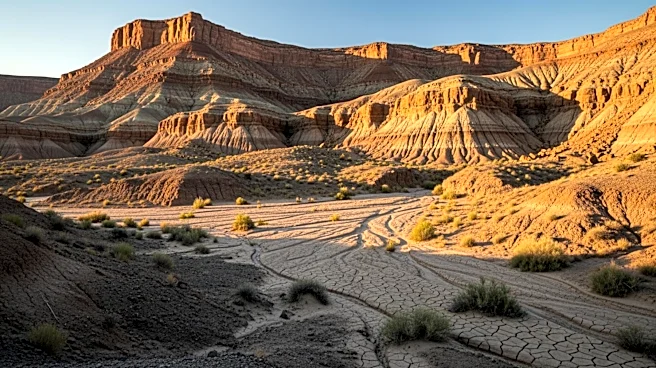
Geologists have resolved a long-standing mystery regarding the Colorado River's absence from the geological record for 5 million years. Research published in Science reveals that the river once flowed into an upstream lake before eventually carving its
path through the Grand Canyon. This transition marked the river's evolution into a continental-scale waterway, significantly impacting the ecosystem of the Colorado River basin. The study utilized detrital zircon geochronology to trace the river's ancient course, providing insights into its historical path and the formation of the Grand Canyon.
Why It's Important?
Understanding the historical path of the Colorado River is crucial for geologists and ecologists as it sheds light on the river's role in shaping the landscape and ecosystem of the American Southwest. This discovery enhances knowledge of the region's geological history and informs current environmental and conservation efforts. The findings also contribute to broader scientific discussions about river dynamics and landscape evolution, offering a clearer picture of how natural forces have shaped the continent over millions of years.
Beyond the Headlines
The study highlights the importance of interdisciplinary collaboration in solving complex geological puzzles. By combining geological, paleontological, and geochemical evidence, researchers have provided a comprehensive view of the Colorado River's ancient history. This approach underscores the value of integrating diverse scientific methods to uncover hidden chapters of Earth's history, which can inform future research and conservation strategies.