




What's Happening?
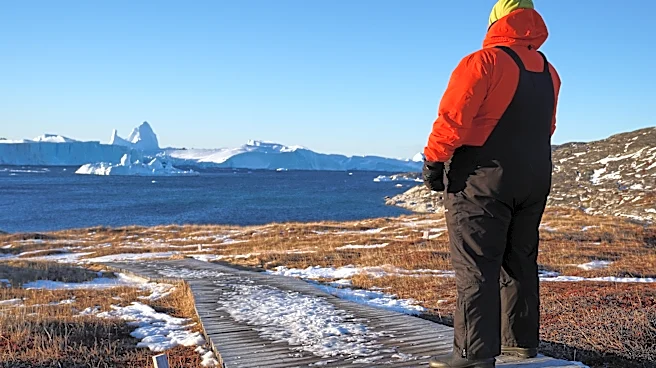
The World Wide Fund for Nature (WWF) and Inuit communities are actively working to conserve the 'Last Ice Area,' a critical region in the Arctic that is expected to retain sea ice longer than other areas despite global warming. This initiative, which
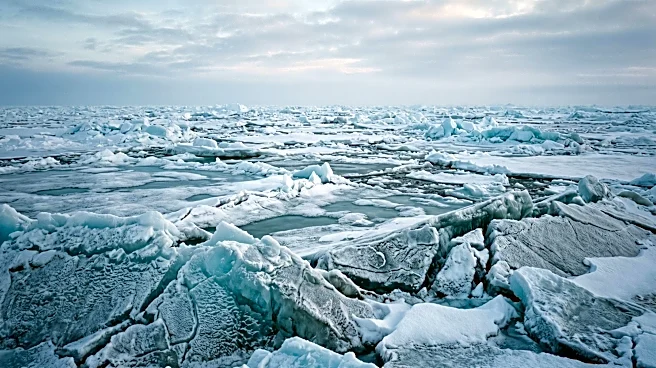
began gaining significant traction in 2008, focuses on the northern coasts of Canada and Greenland. Scientists, including Stephanie Pfirman and Bruno Tremblay, identified this region as a vital refuge for ice-dependent marine life, such as polar bears, and unique cold-loving microscopic organisms. The conservation efforts involve integrating Inuit Qaujimajatuqangit (Traditional Knowledge) and have led to the establishment of a marine protected area named Tuvaijuittuq, meaning 'the place where the ice never melts,' by the Canadian government in partnership with Inuit representatives. This area is crucial not only for its biological significance but also for its deep cultural importance to the Inuit, whose way of life is intrinsically linked to sea ice.
Why It's Important?
The preservation of the Last Ice Area holds immense importance for global biodiversity and indigenous cultures. As the Arctic warms at an accelerated rate, this region serves as a last stronghold for species adapted to icy environments, preventing their potential extinction. The area's unique ecosystem, including its thick, multi-year sea ice and associated polar desert landscapes, supports a complex food web from microscopic life to large marine mammals. For the Inuit, the ice is fundamental to their cultural identity, travel, and hunting practices, making its protection a matter of cultural survival. The collaborative approach, combining scientific research with Inuit Traditional Knowledge, sets a precedent for effective conservation strategies that respect and integrate indigenous perspectives. The continued existence of this ice also plays a role in regional climate regulation, influencing coastal land temperatures and downstream marine ecosystems like the Pikialasorsuaq polynya, which supports vast populations of seabirds, fish, and whales.
What's Next?
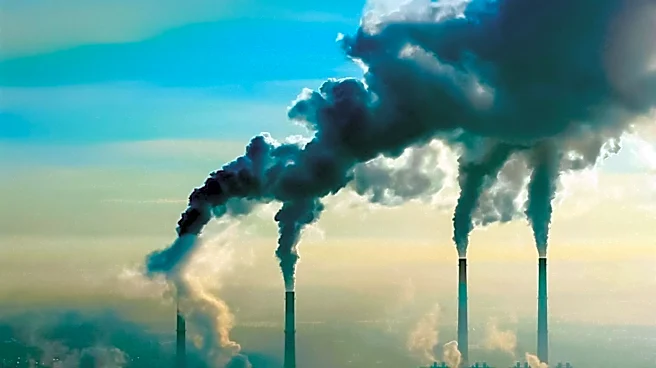
The ongoing efforts will focus on expanding current protections to safeguard the broader Last Ice Area, including the ice above Greenland and into the Central Arctic Ocean. This ambitious undertaking necessitates significant international cooperation to address the transboundary nature of the Arctic ecosystem. While the Last Ice Area is projected to endure longer than other Arctic regions, its long-term survival is ultimately dependent on global action to reduce greenhouse gas emissions. Scientists have already observed signs of thinning ice and ecosystem changes within the area, underscoring the urgency of these efforts. Continued research, monitoring, and advocacy will be crucial to ensure that this extraordinary ice and the life it sustains can persist for future generations, emphasizing the need for sustained international climate action.
Beyond the Headlines
The conservation of the Last Ice Area highlights a broader ethical and environmental challenge: balancing the immediate needs of indigenous communities with the long-term impacts of global climate change. The Inuit's profound connection to the ice, articulated through their language and cultural practices, underscores the human dimension of climate change beyond mere scientific data. The concept of an 'ice shed,' analogous to a watershed, reveals the interconnectedness of the entire Arctic Ocean, where ice formed far away drifts into this critical refuge. This emphasizes that local conservation efforts, while vital, are insufficient without a global commitment to climate mitigation. The initiative also showcases the power of collaborative governance, where indigenous knowledge systems are recognized as equally valuable to scientific data in shaping conservation policy, fostering a more holistic and culturally sensitive approach to environmental protection.