






What's Happening?
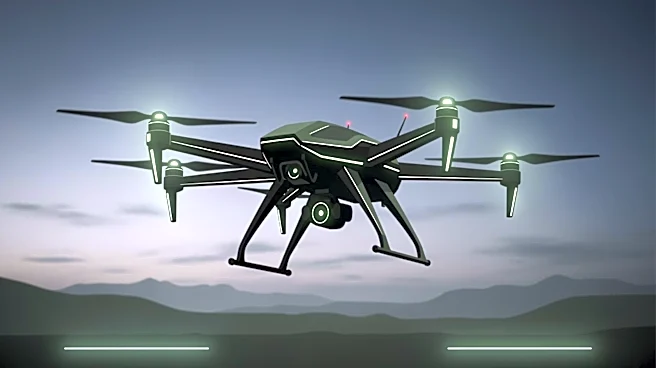
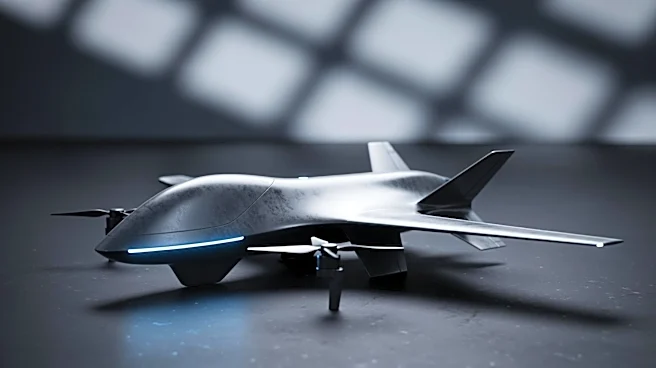
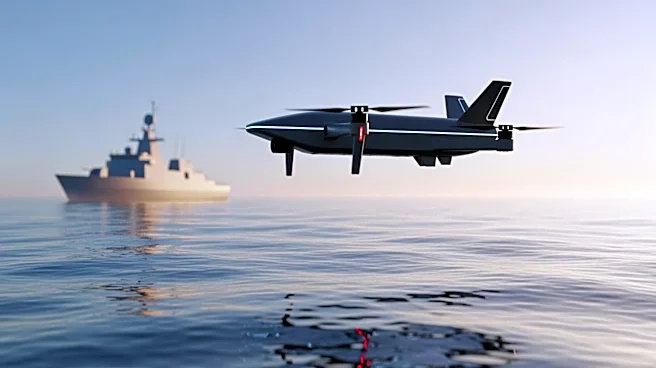
AeroVironment has announced the launch of its new 'Mayhem' line of systems, designed to enhance the U.S. Army's capabilities in air-, ground-, and maritime-launched systems. The first in this line, the Mayhem 10, is equipped with a 10-lb payload capacity
and offers a range of up to 100 km with 50 minutes of endurance. The system is built to operate autonomously in contested environments, featuring advanced technologies such as M-Code GPS and a Silvus datalink for secure command-and-control operations. The Mayhem 10 can be fitted with various payloads, including the Javelin Multi-Purpose warhead for anti-armor strikes and components for electronic warfare and communications relay. AeroVironment plans to begin low-rate initial production within the year, aiming for a production capacity of hundreds per month.
Why It's Important?
The introduction of the Mayhem line represents a significant advancement in the U.S. Army's capabilities for launched effects systems, which are crucial for modern warfare strategies. These systems provide enhanced strike and electronic warfare capabilities, allowing for more versatile and resilient operations in contested environments. The ability to carry different payloads makes the Mayhem 10 adaptable to various mission requirements, potentially increasing the effectiveness of military operations. AeroVironment's focus on autonomy and secure communication networks addresses the growing need for systems that can withstand electronic interference, a critical factor in maintaining operational integrity in hostile territories.
What's Next?
AeroVironment is targeting the U.S. Army's Launched Effects-Short Range program with the Mayhem 10, while also exploring opportunities with the U.S. Marine Corps and international markets. The company is planning to expand the Mayhem line with larger systems capable of carrying bigger payloads, which could be integrated into the Army's Launched Effects-Medium Range and -Long Range programs. As production ramps up, AeroVironment's systems may become a staple in military arsenals, potentially influencing future defense strategies and procurement decisions.