



What's Happening?
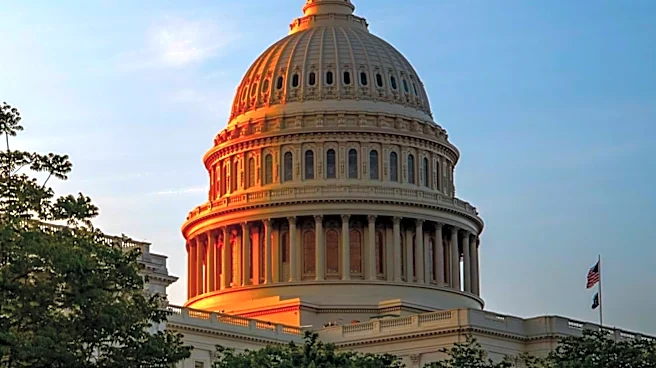
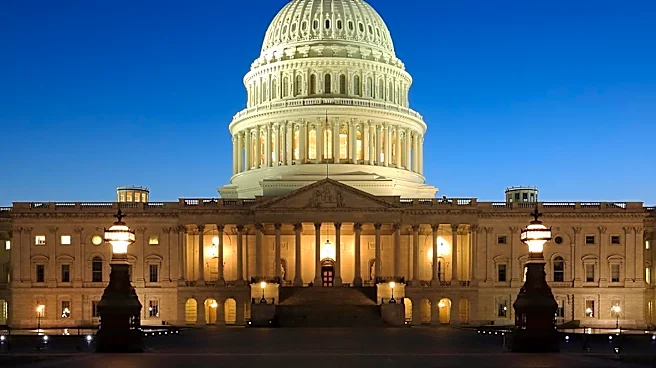
The U.S. House of Representatives has approved the Protect Economic and Academic Freedom Act, a Republican-backed bill designed to penalize universities that participate in boycotts of Israel or restrict student exchanges with the country. The legislation
passed with a vote of 237-169, seeing 33 Democrats join the Republican majority, while two Republicans opposed it. This measure targets institutions receiving federal funding, including those participating in federal student aid programs, by barring them from engaging in such boycotts. Additionally, universities receiving federal funding for international study would be required to annually certify that they do not prevent students from participating in programs in Israel. The bill's sponsors, including Republican Congresswoman Virginia Foxx and Democrat Josh Gottheimer, argue it is a necessary step to combat antisemitism on college campuses and counter the Boycott, Divestment, and Sanctions (BDS) movement, which they describe as seeking to destroy Israel. Critics, however, view the bill as a significant infringement on free expression and academic freedom, with concerns that it could force universities to engage with Israeli settlements in the West Bank, which are considered illegal under international law.
Why It's Important?
This legislation carries significant implications for academic institutions across the United States, potentially reshaping policies related to international partnerships and academic freedom. By linking federal funding to compliance with anti-boycott provisions, the bill could compel universities to re-evaluate their stances on the Israeli-Palestinian conflict and their engagement with the BDS movement. The measure's broad definition of 'Israel' is a point of contention, as it could implicitly include Israeli settlements in the West Bank, forcing universities to engage with entities in these areas. This could lead to legal challenges under the False Claims Act for institutions accused of non-compliance, effectively creating an 'affirmative action' for foreign nations, as noted by Lara Friedman, president of the Foundation for Middle East Peace. The bill also sparks a broader debate on the First Amendment right to boycott, with critics arguing that it undermines the ability of individuals and institutions to express political opposition through economic means. The outcome in the Senate will determine whether this bill becomes law, setting a precedent for how the U.S. government can influence academic and commercial decisions related to foreign policy.
What's Next?
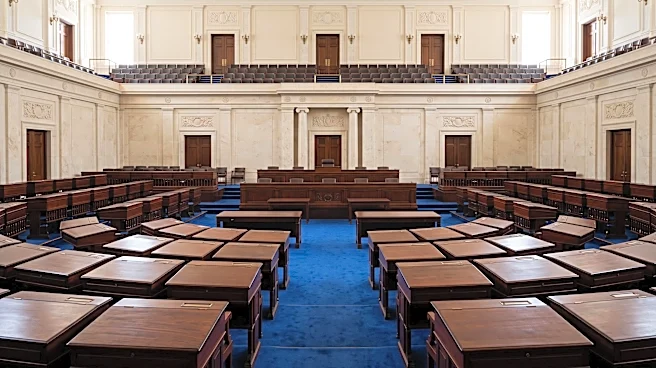
The Protect Economic and Academic Freedom Act now advances to the U.S. Senate for consideration. Its fate in the Senate remains uncertain, as it would require 60 votes to pass in the narrowly Republican-controlled chamber. If passed, universities would need to adapt their policies to ensure compliance with the new regulations, potentially leading to increased scrutiny of their international partnerships and academic programs. The legislation could also face legal challenges from civil liberties groups and academic organizations, who argue it infringes upon constitutional rights and academic freedom. The debate surrounding the bill is expected to continue, highlighting ongoing tensions between efforts to combat antisemitism and concerns over free speech and the right to boycott. The bill's progression will be closely watched by universities, advocacy groups, and policymakers as it could set a new standard for engagement with international political issues within the U.S. academic landscape.
Beyond the Headlines
Beyond its immediate impact on university funding and policies, this bill delves into deeper ethical and legal dimensions concerning free speech, academic freedom, and the role of U.S. foreign policy in domestic institutions. The legislation's attempt to define and restrict 'nonexpressive commercial boycotts' raises fundamental questions about the nature of protest and the extent to which economic actions can be separated from political expression. Critics argue that such measures could have a chilling effect on open debate and dissent on college campuses, particularly regarding sensitive international issues. The bill also highlights the increasing influence of pro-Israel lobbying groups in U.S. politics, with significant financial contributions to political campaigns. This legislative effort could set a precedent for future attempts to regulate boycotts targeting other 'major strategic partners' of the United States, potentially expanding government oversight into commercial and academic decisions based on foreign policy considerations. The long-term implications could include a redefinition of the boundaries of free expression within educational settings and a shift in how U.S. institutions navigate complex global political landscapes.