







What's Happening?
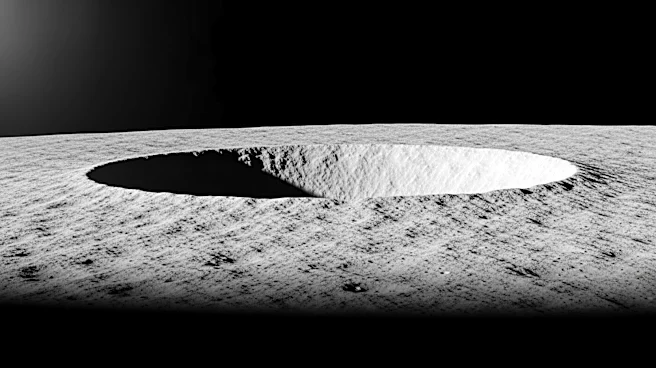
In late spring 2024, a significant impact event on the Moon created a new crater, 225 meters across, captured by NASA's Lunar Reconnaissance Orbiter Camera. This crater, formed by a high-speed space rock, is the largest observed during the LRO mission,
surpassing the previous largest crater of 70 meters. The event is considered a once-in-a-century occurrence, providing a rare opportunity to study crater formation with high-quality before-and-after imagery. The crater's funnel shape and the distribution of debris suggest the impactor arrived from the south-southwest, offering insights into the dynamics of lunar impacts.
Why It's Important?
The discovery of this new crater is crucial for understanding impact processes on the Moon and across the solar system. The high-resolution imagery allows scientists to refine models of crater formation, which are essential for interpreting the Moon's geological history and assessing impact risks to Earth. This research contributes to planetary science by providing a detailed case study of a large impact event, enhancing our knowledge of how such events shape planetary surfaces.
What's Next?
Researchers will continue to analyze the data from the Lunar Reconnaissance Orbiter to improve models of impact cratering. The findings will be used to test and refine theories about crater formation, not only on the Moon but also on other celestial bodies. This ongoing research will aid in future lunar exploration missions and inform strategies for planetary defense against potential asteroid impacts.