








What's Happening?
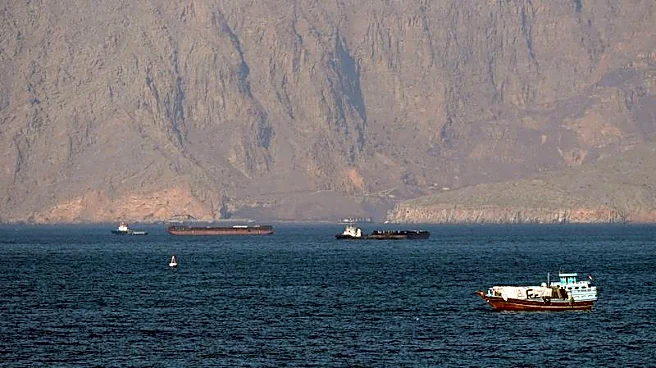
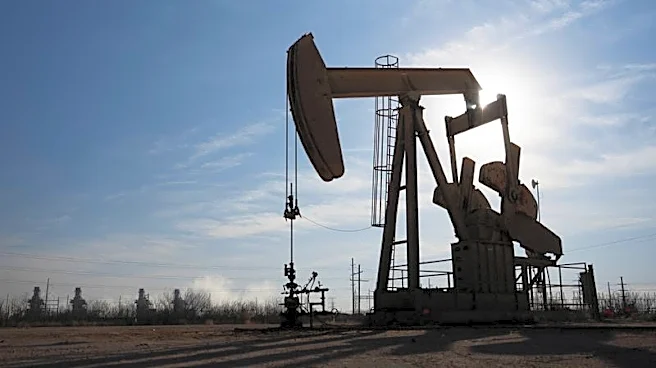
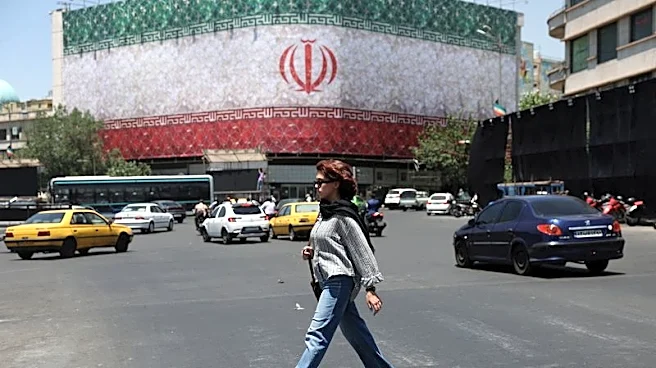
The United States and Iran have reached an agreement to reopen the Strait of Hormuz, lifting the US maritime blockade on Iran. This development has led to a decrease in oil prices, with Brent futures falling below $80 per barrel. The agreement, signed
by President Trump and Iran's parliamentary speaker, aims to ease tensions and stabilize oil markets. However, risks remain if geopolitical tensions in the region, particularly involving Israel and Lebanon, escalate.
Why It's Important?
The reopening of the Strait of Hormuz is significant for global oil markets, as it is a critical chokepoint for oil transportation. The agreement could lead to increased oil supply and lower prices, benefiting consumers and industries reliant on oil. However, the geopolitical landscape remains fragile, and any escalation in tensions could disrupt supply and lead to price volatility. The agreement also highlights the complex interplay between diplomacy and energy markets.
What's Next?
The focus will be on monitoring the stability of the agreement and any potential geopolitical developments that could impact oil supply. The US and Iran may explore further diplomatic engagements to ensure long-term stability. Additionally, oil market participants will be assessing the impact of increased supply on prices and potential shifts in global energy dynamics.