
What's Happening?
Iran has submitted a 14-point response to the U.S. proposal to end the conflict that began with U.S. and Israeli attacks on Iran. The response includes demands for a quick resolution within 30 days, withdrawal
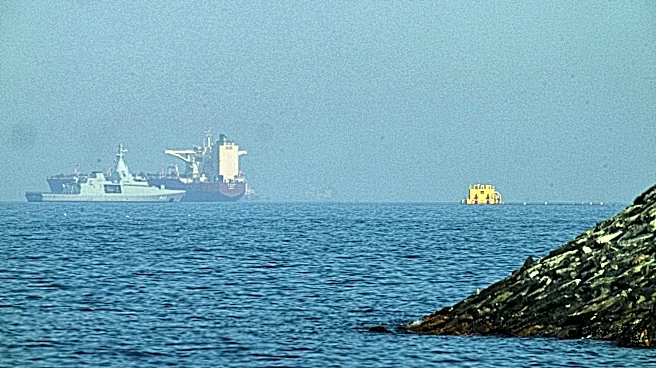
of U.S. forces, and lifting of sanctions. Iran also seeks guarantees against future military aggression and a new mechanism for the Strait of Hormuz. President Trump has expressed dissatisfaction with Iran's proposal, indicating that negotiations are ongoing. The U.S. had previously proposed a 15-point framework, including the reopening of the Strait of Hormuz and ending Iran's nuclear program.
Why It's Important?
This development is crucial as it reflects the complex dynamics of U.S.-Iran relations and the broader geopolitical tensions in the Middle East. The demands made by Iran, particularly regarding the Strait of Hormuz, have significant implications for global oil supply and regional security. The U.S. response to these demands will be pivotal in determining the future of diplomatic relations and could either lead to a peaceful resolution or further escalation of conflict.
What's Next?
The U.S. is currently reviewing Iran's proposal, and the outcome of this review will determine the next steps in the negotiation process. If the U.S. rejects Iran's demands, there is a possibility of renewed military actions, which could destabilize the region further. The international community is likely to watch closely, as the resolution of this conflict could have far-reaching consequences for global security and economic stability.