







What's Happening?
A new policy brief from the United Nations University Institute for Water, Environment and Health (UNU-INWEH) reveals that a faster and fairer global COVID-19 vaccine rollout could have saved over 8 million lives by the end of 2021, predominantly in lower-middle-income
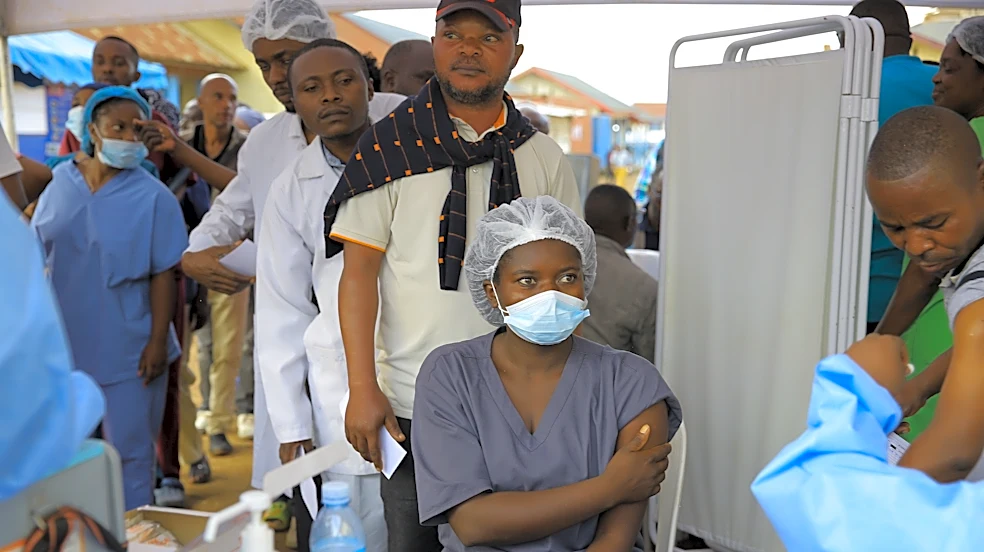
countries. The brief, accompanied by a peer-reviewed publication in the Expert Review of Vaccines journal, highlights that while COVID-19 vaccines were introduced faster and more equitably than previous vaccines, access remained sharply unequal. By the end of 2021, high- and upper-middle-income countries had administered at least one dose per person on average, compared to one for every three people in lower-middle-income countries and one for every 25 people in low-income countries. This disparity prolonged transmission, increased the risk of new variants, and slowed economic recovery globally. The research team argues that fair vaccine-sharing rules must be established before the next pandemic, rather than negotiated during a crisis.
Why It's Important?
The findings underscore a critical failure in global health equity during the COVID-19 pandemic, demonstrating that millions of lives could have been saved with a more equitable distribution of vaccines. The unequal access not only led to preventable deaths but also had far-reaching consequences, including extended periods of viral transmission and the emergence of new variants, which impacted all nations. This highlights the interconnectedness of global health and the economic security of all countries. The policy brief's call for an 'equity-by-design' framework is crucial for future pandemic preparedness, advocating for mechanisms that ensure timely and fair access to countermeasures for all nations, regardless of their economic status. Without such a framework, the world remains vulnerable to similar disparities and prolonged crises in the face of future health emergencies.
What's Next?
The policy brief proposes a six-step 'equity-by-design' framework for national governments, international organizations, vaccine manufacturers, and public health advocates. These recommendations include preparing before the next health emergency by designing pooled procurement mechanisms, funding research and development, and linking pathogen surveillance to vaccine research and manufacturing. It also calls for equitable vaccine allocation between nations, securing timely and equitable vaccine procurement through transparent agreements, and promoting transparent data sharing and effective communication. Furthermore, the framework suggests insulating vaccine decisions from political distortion and strengthening delivery systems and regional capacity. The authors also advocate for sustained investment in pathogen genomic surveillance and encouraging timely sharing of high-quality, geographically representative data through recognition and equitable access to benefits, rather than punitive responses. These steps aim to establish operational mechanisms for equitable access before the next health emergency, rather than improvising during it.
Beyond the Headlines
The unequal COVID-19 vaccine rollout exposed deep-seated systemic issues in global governance and resource distribution, revealing how a shared global threat can disproportionately harm the poor and less privileged. The 'equity-by-design' framework attempts to address these structural inequities by embedding fairness into the very architecture of pandemic preparedness and response. This includes not only financial and logistical mechanisms but also ethical considerations, such as supporting rather than penalizing countries that report outbreaks and dangerous variants early. The emphasis on regional manufacturing and tailored solutions for low-resource settings points to a move away from a centralized, top-down approach to a more distributed and resilient global health infrastructure. Ultimately, the lessons learned from the COVID-19 pandemic, as articulated in this brief, challenge the international community to prioritize collective well-being and establish robust, equitable systems to safeguard against future health crises, recognizing that no one is safe until everyone is safe.