





What's Happening?
Javier Bardem, the Spanish actor, has publicly refuted a viral image circulating on social media that claimed he owned 25 properties. Bardem addressed the rumor on his Instagram stories, expressing both irony and anger, stating, 'Twenty-five? I repeat...
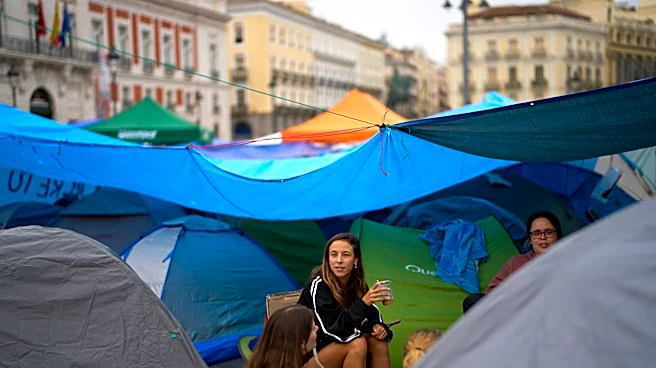
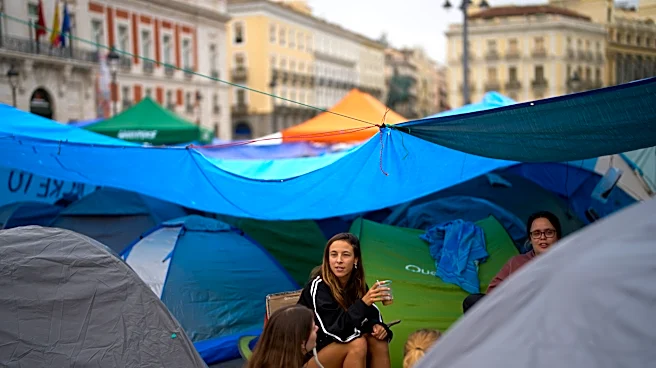
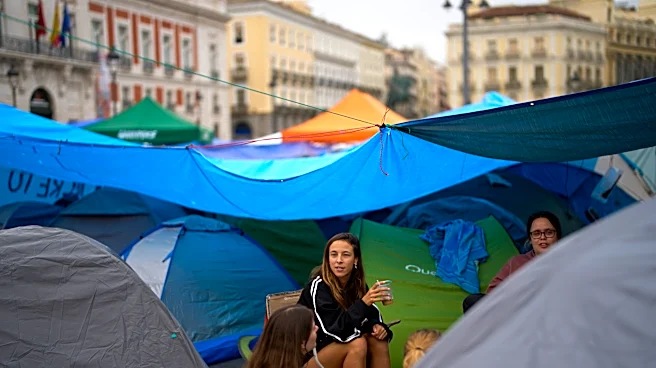
These MONOneuronal fascists no longer know what to invent to subsist,' accompanied by laughing emojis. The image in question presented a supposed ranking of politicians and cultural figures based on their alleged property holdings, portraying them as real estate speculators. Bardem was listed at the top, followed by other prominent figures like Pedro Almodóvar and Joan Manuel Serrat. This denial comes at a time when housing issues are a major concern in Spain, with protests against evictions and 'vulture funds' gaining traction. Bardem has been actively using his Instagram profile to speak out against evictions and support the protesters.
Why It's Important?
This incident highlights the growing trend of misinformation and the rapid spread of unverified claims on social media, particularly concerning public figures. The viral image, despite being false, aimed to discredit Bardem and other celebrities who have publicly supported housing rights movements. This tactic can undermine legitimate social causes by attempting to expose perceived hypocrisy among their advocates. The timing is significant as Spain grapples with a housing crisis, making public discourse around property ownership and speculation highly sensitive. The attempt to link Bardem, a vocal supporter of housing rights, to extensive property ownership could be seen as an effort to neutralize his influence and shift public attention away from the core issues of housing affordability and evictions. It also underscores the challenges public figures face in managing their image and messaging in the age of instant, often unchecked, online information.
What's Next?
Following Bardem's denial, it remains to be seen how widely his refutation will spread and whether it will effectively counter the initial viral claim. The incident may prompt further discussions about the responsibility of social media platforms in curbing misinformation and the need for users to critically evaluate information before sharing. Public figures involved in social activism might become more cautious about how their personal lives are perceived in relation to their advocacy. The broader debate on housing in Spain is likely to continue, with or without the distraction of such rumors, as the underlying issues of affordability and evictions persist. This event could also lead to increased scrutiny of the sources and motivations behind such viral content, especially when it targets individuals involved in politically charged discussions.
Beyond the Headlines
The controversy surrounding Javier Bardem's alleged property ownership delves into deeper societal implications regarding wealth, celebrity, and social activism. It exposes the tension between public expectations of activists to embody their stated ideals and the reality of their personal circumstances. The term 'caviar left,' often used by critics to describe progressive figures with high economic status, reflects a cynical view that questions the authenticity of their advocacy. This incident also touches upon the ethical dimensions of online information dissemination, where the speed of sharing often outpaces the verification of facts. It underscores how easily narratives can be manipulated to undermine public trust and divert attention from systemic issues. Ultimately, this event serves as a microcosm of the broader struggle to maintain factual integrity and constructive dialogue in an increasingly polarized and digitally interconnected world.