
What's Happening?
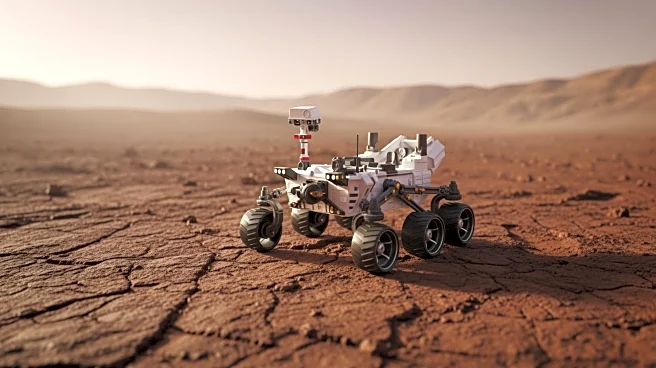
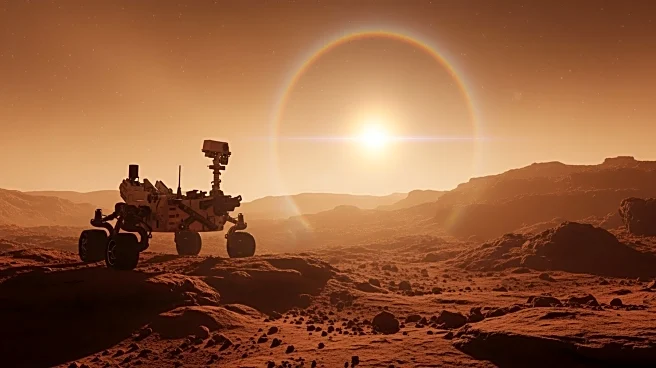
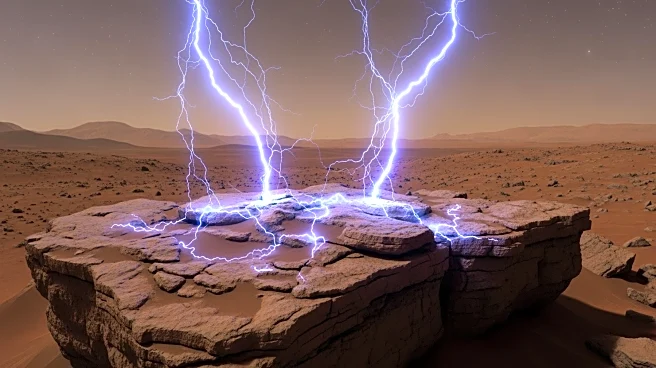
NASA's Perseverance rover has recorded the first direct evidence of electrical discharges, akin to 'mini lightning,' on Mars. This discovery was made using a high-sensitivity microphone on the rover, which
captured the sound of an electric discharge during a dust devil event. The phenomenon, known as triboelectric activity, occurs when friction between airborne dust grains generates static electricity. The findings confirm decades of theoretical models and laboratory simulations that suggested such discharges could occur in Mars' dust storms. The SuperCam instrument on Perseverance, although not originally intended for this purpose, recorded 55 confirmed discharges over two Martian years. These discharges, occurring within two meters of the rover, produced brief acoustic pressure waves and were consistent with small arcs of electricity.
Why It's Important?
The confirmation of electrical discharges on Mars has significant implications for future missions and the understanding of Martian atmospheric chemistry. These discharges could affect local chemistry by generating reactive oxidants like hydrogen peroxide, which may degrade organic compounds on the Martian surface. This poses challenges for missions aiming to detect biosignatures or preserve samples for return to Earth. Additionally, while the discharges do not pose immediate hazards to equipment, their long-term effects on insulating materials and sensors are under study. The findings highlight the value of passive sensing tools in planetary exploration and suggest that future missions should include instruments specifically designed to measure electric fields.
What's Next?
Future Mars missions may incorporate purpose-built electric field instruments to better quantify the frequency and strength of these discharges. Understanding the interaction between electrostatic processes and Martian geochemistry will be crucial, especially as space agencies plan for long-duration crewed missions to Mars in the 2030s. The research also calls for further examination of local atmospheric conditions, particularly within dust devils, which are now linked to both mechanical and electrical activity. These insights could inform the design of future exploration equipment and strategies for sample collection and preservation.
Beyond the Headlines
The discovery of electrical discharges on Mars intersects with broader questions in Martian astrobiology and atmospheric chemistry. The production of oxidants through triboelectric discharges may contribute to the high reactivity of Martian soil, complicating the preservation of organic compounds. This chemical reactivity has been a focus of previous missions, and understanding it is essential for interpreting potential biosignatures. The findings also emphasize the need to explore how electrostatic processes interact with known geochemical pathways, potentially influencing the chemical evolution of the Martian environment.