




What's Happening?
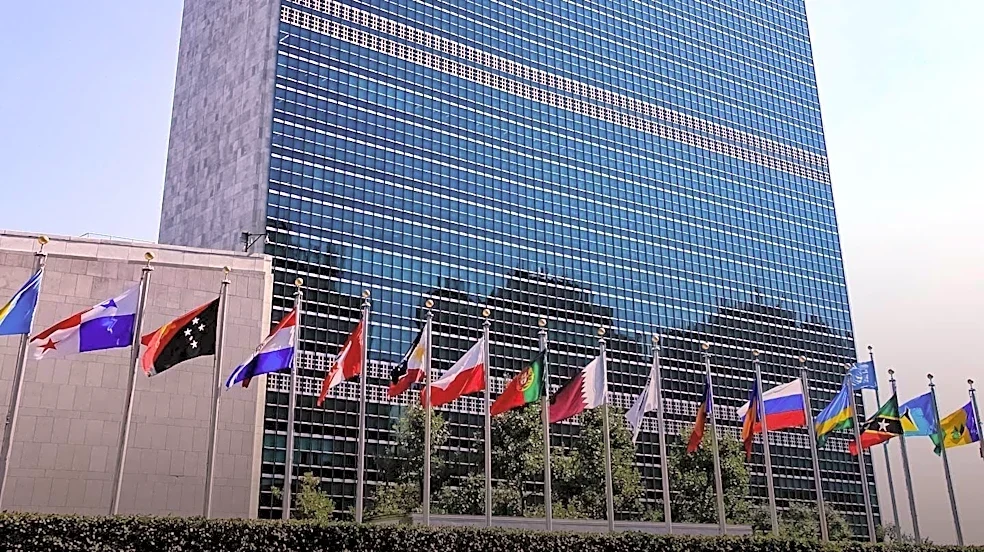
UN Watch, a Geneva-based non-governmental organization, has released the first-ever database tracking external funding of UN human rights experts. The investigation, presented at the British Parliament, reveals significant disclosure gaps and identifies
approximately $88 million in grants and support for UN rapporteurs. This includes $11.8 million in cash and in-kind support that was omitted from mandate-holders' annual UN disclosures, and $1.4 million in disclosed support where donors were not identified. More than $42 million is flagged for missing information, opaque sourcing, or disclosure violations. The database cross-references UN mandate-holders' annual disclosures with U.S. tax filings, public grant records, and other documented financial support. Hillel Neuer, UN Watch Executive Director, highlighted concerns about transparency and accountability within the UN's human rights system, questioning who finances the work of these experts and whether private donors are influencing agendas presented as independent UN expertise. The report specifically mentions George Soros's Open Society Foundations, the Ford Foundation, and Wellspring Philanthropic Fund among the progressive foundations financing mandates through universities and NGOs, often with funds transferred to organizations founded or led by the rapporteurs themselves.
Why It's Important?
This exposé is important because it raises critical questions about the impartiality and independence of UN human rights experts, whose findings significantly influence government policy, media coverage, and public discourse globally. The lack of transparent funding disclosures can lead to perceived or actual conflicts of interest, undermining the credibility of the UN's human rights mechanisms. When politically engaged foundations or governments provide substantial financial support, and this support is not fully disclosed, it creates an environment where agendas could be shaped by external interests rather than objective human rights principles. This could erode public trust in international institutions and their ability to act as neutral arbiters of human rights. For the U.S., this could impact its foreign policy decisions, particularly concerning human rights issues, as the reliability of UN reports and expert opinions might be called into question. It also highlights a broader issue of accountability for non-governmental organizations and foundations that operate internationally, especially when their funding practices are not fully transparent.
What's Next?
UN Watch is advocating for 12 specific reforms to address the identified issues. These reforms include a complete ban on earmarked funding from governments or other external entities, the establishment of an independent external mechanism to review, audit, and discipline mandate-holders, and external vetting of candidates by democracies, independent of the UN's current selection process. Additionally, UN Watch calls for mandatory evidentiary standards to reduce reliance on unverified and anonymous sources. The organization urges democracies to insist on basic standards of transparency, impartiality, and accountability from those who investigate human rights. The release of this database is likely to prompt increased scrutiny from policymakers, journalists, and the public regarding the financial relationships behind UN-appointed human rights experts. This could lead to debates within the UN and among member states about the need for stricter disclosure rules and oversight mechanisms to safeguard the integrity of human rights reporting.
Beyond the Headlines
The implications of this investigation extend beyond mere financial transparency, touching upon the ethical and cultural dimensions of international human rights advocacy. The report suggests a potential long-term shift in how the independence of UN experts is perceived, moving from an assumption of neutrality to a demand for verifiable financial accountability. The involvement of prominent foundations like Open Society Foundations and the Ford Foundation in funding these mandates, often through intermediaries and with incomplete disclosures, raises questions about the influence of private philanthropy on global governance and policy. This situation could fuel skepticism about the objectivity of human rights reports, particularly from those who already view such organizations with suspicion. It also highlights the challenge of maintaining independence in an increasingly complex global funding landscape, where various actors, including states and private entities, seek to advance their own perspectives through international platforms. The call for reforms could lead to a re-evaluation of the entire funding model for UN human rights mechanisms, potentially leading to a more standardized and transparent system.