








What's Happening?
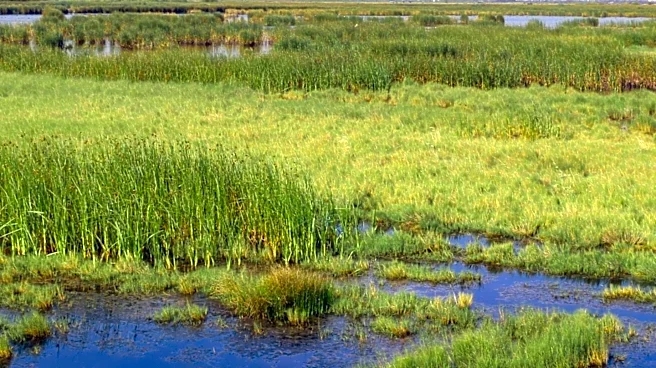
Pantheon Regeneration, a Colorado-based company, has launched a significant peatland restoration project in North Carolina. This initiative aims to restore a 23-square-mile tract of peatland that has been degraded by decades of drainage for agricultural
ventures. The degradation has led to the emission of 130,000 tons of climate-warming carbon dioxide annually. The project involves blocking ditches to control the water table, culling invasive species, and replanting native flora. This restoration effort is modeled after successful projects by non-profits and government agencies, including the adjacent Pocosin Lakes National Wildlife Refuge. A key aspect of Pantheon's plan is to fund these restoration efforts by selling carbon credits to corporations seeking to offset their greenhouse gas emissions. Over the next decade, Pantheon intends to restore and permanently conserve a million acres of peatland stretching from Virginia to northern Florida, creating large corridors for biodiversity and climate impact.
Why It's Important?
Peatlands are critical ecosystems, storing one-third of the Earth’s carbon dioxide despite covering only 3% of the global land surface, which is more than all forests combined. When degraded, primarily by dewatering for agriculture, they release substantial volumes of greenhouse gases, contributing approximately 6% of the annual global total. The peatlands along the Eastern Seaboard, including those in North Carolina, are among the most threatened globally. The restoration of these peatlands is vital for climate mitigation, as intact peatlands act as significant carbon vaults, some up to 50 feet deep. They also play a crucial role in storing about 10% of global freshwater, controlling flooding, and preventing wildfires. The project's reliance on carbon credits highlights a market-based approach to environmental conservation, potentially incentivizing corporate investment in ecological restoration and offering a scalable model for addressing climate change through natural solutions.
What's Next?
Pantheon Regeneration plans to expand its restoration efforts across a million acres of peatland from Virginia to northern Florida over the next decade. The company will continue to sell carbon credits, with each credit representing a metric ton of carbon, to fund future land acquisitions and restoration activities. The effectiveness of these carbon credits will be rigorously verified by an outside third party, based on decades of data from Duke University ecologist Curtis Richardson and ongoing monitoring. Pantheon is prioritizing the restoration of already degraded sites, aiming to act swiftly before these critical ecosystems are lost entirely. The project also anticipates a significant return of native wildlife, including various bird species, red wolves, and other reptiles, plants, fish, and insects, as the habitats are restored.
Beyond the Headlines
The Pantheon Regeneration project underscores the often-underestimated role of soil and peat in carbon sequestration, a natural climate solution that plant and animal ecologist Steve Apfelbaum suggests is more effective than reforestation alone. The initiative also brings to light the ethical and practical considerations surrounding carbon credit markets. While carbon credits offer a financial mechanism for conservation, their effectiveness has been questioned in the past due to concerns about exaggerated claims or fraudulent schemes. Pantheon's commitment to high-quality, scientifically verified credits, backed by extensive data and third-party verification, aims to address these concerns and build trust in this market. This project could set a precedent for how private companies, in collaboration with scientific experts and investors like Microsoft, can leverage market mechanisms to achieve large-scale environmental restoration and combat climate change.