




What's Happening?
In the ongoing debate over climate action in the United States, states are increasingly asserting their authority to lead climate justice funding initiatives. The Department of Justice has filed lawsuits against states like New York and Vermont over their 'climate
superfund' laws, which require fossil fuel companies to pay for climate damages. These state laws are being challenged on the grounds that they are preempted by federal law. Despite this, states such as California and Colorado continue to pursue litigation against major oil companies, seeking compensation for climate-related damages. This jurisdictional struggle highlights the tension between federal and state powers in addressing climate change.
Why It's Important?
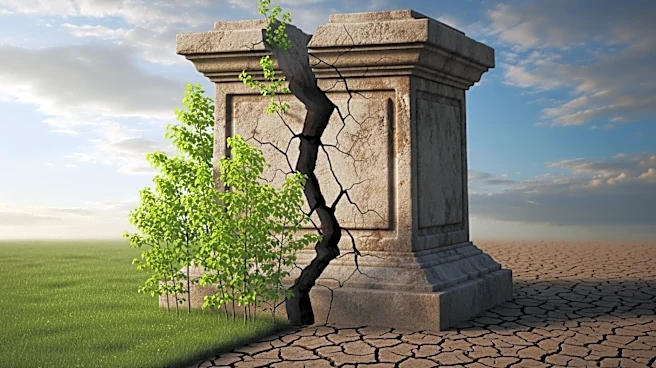
The actions taken by states to lead climate justice funding are crucial as they represent a shift in how climate policy is implemented in the U.S. With federal climate regulation facing legal challenges and tighter interpretations, states are stepping up to fill the gap. This decentralization allows for more localized and adaptive approaches to climate action, potentially leading to more effective and targeted outcomes. However, it also raises concerns about the consistency and equity of climate policies across different states. The ability of states to influence climate funding and policy could significantly impact the effectiveness of national climate goals and the distribution of resources to vulnerable communities.
What's Next?
As states continue to assert their authority in climate justice funding, the legal and political landscape is likely to evolve. Future court decisions will play a critical role in determining the balance of power between federal and state governments in climate policy. Additionally, the coordination between state legal offices and environmental advocacy groups could become more strategic, potentially leading to more integrated approaches to climate litigation and funding. The outcomes of these efforts will shape the future of climate governance in the U.S., influencing how resources are allocated and which communities benefit from climate initiatives.