





What's Happening?
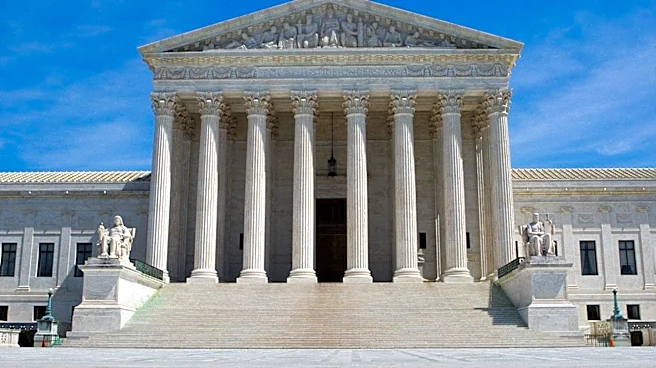
The U.S. Supreme Court is set to reconsider the practice of 'universal vacatur' for unlawful agency rules, a development with significant implications for regulated businesses. The federal government has filed a petition for certiorari in Department of Health
and Human Services v. Texas Medical Association (No. 26-491), asking the Court to rule that the Administrative Procedure Act (APA) does not authorize federal courts to universally vacate unlawful agency rules. Alternatively, the government argues that vacatur should be a discretionary remedy rather than an automatic consequence. This issue gained prominence after Chief Justice John Roberts expressed skepticism about the government's position in a previous case, United States v. Texas (2023). The current petition stems from a dispute over the No Surprises Act, where federal courts vacated provisions nationwide after finding the agencies' methodology for calculating 'qualifying payment amounts' unlawful. WilmerHale's Administrative Law practice is closely monitoring this issue, noting its potential to reshape administrative law challenges.
Why It's Important?
The Supreme Court's decision on universal vacatur could fundamentally alter how regulated businesses and trade associations challenge federal agency actions. Historically, a successful APA challenge often resulted in the unlawful rule being vacated for everyone, not just the plaintiff, allowing a single lawsuit to benefit an entire industry. If the Court limits or eliminates universal vacatur, regulated entities may need to litigate individually, intervene in existing cases, or attempt class certification, which the Court has previously acknowledged is ill-suited for challenges against the federal government. This shift could make it more difficult for indirectly regulated parties to obtain meaningful relief, as party-specific remedies might be challenging to administer when a rule primarily targets other entities. Furthermore, it could lead to national regulatory programs operating differently for various parties, increasing complexity in compliance planning, pricing, and contracting across industries.
What's Next?
Regulated entities are advised to closely monitor the case over the coming months, as the Solicitor General has presented a direct and recurring question that several Justices have already identified as significant. If the Court grants certiorari, businesses and trade associations should consider amicus participation to provide concrete examples of how agency rules operate across interconnected markets and why limited relief might be incomplete or impractical. Trade associations, in particular, have a vested interest in ensuring the Court understands the implications for member-level relief in associational suits. Even a partial win for the government, making vacatur a discretionary remedy, would shift the burden in every APA case, requiring plaintiffs to justify the breadth of the requested remedy and potentially leading to more instances of 'remand without vacatur.' This would significantly change the dynamics of APA litigation and necessitate a re-evaluation of legal strategies for challenging federal regulations.