



What's Happening?
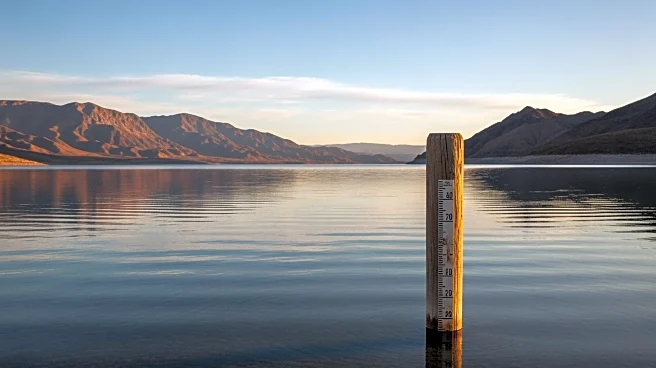
California regulators are revisiting the issue of Mono Lake's water levels, which remain significantly below the state-mandated target set over three decades ago. The Los Angeles Department of Water and Power (DWP) has been required to limit water diversions
to help raise the lake's level, but the lake is still about 9 feet below the required level. A new report by UCLA climate scientists suggests that without L.A.'s water use from the creeks feeding Mono Lake, the water level would be approximately 4 feet higher. The report also indicates that climate change has contributed to the lake being about 2.6 feet lower than it might otherwise be. Environmental advocates and former officials are urging the state water board to enforce stricter measures on L.A.'s water usage to help the lake recover.
Why It's Important?
The situation at Mono Lake highlights the ongoing challenges of water management in California, particularly in balancing urban water needs with environmental conservation. The lake is a critical habitat for migratory birds and its health is vital for maintaining biodiversity in the region. The debate over water usage also reflects broader tensions between urban development and environmental sustainability. If L.A. is required to reduce its water intake from the Mono Basin, it could set a precedent for other water management decisions in the state, potentially impacting water policy and urban planning. The outcome of this issue could influence how California addresses similar environmental challenges in the future.
What's Next?
The California State Water Resources Control Board is expected to continue discussions on the matter, with potential policy changes on the horizon. The DWP has expressed the need for further review of the UCLA report before any decisions are made. Stakeholders, including environmental groups and local tribes, are likely to continue advocating for reduced water usage from the Mono Basin. The board's decision could lead to significant changes in how water resources are allocated in the region, affecting both environmental and urban stakeholders.