






What's Happening?
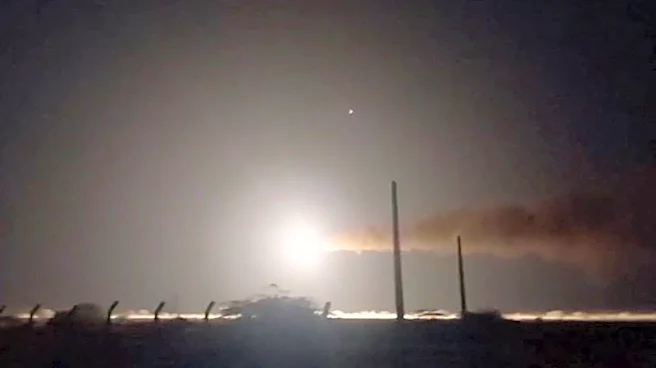
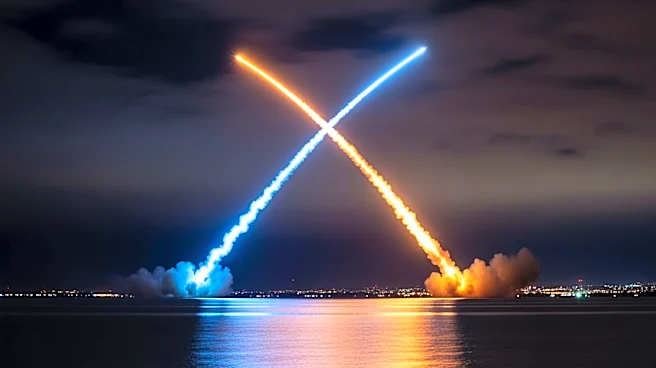
The U.S. and Iran are engaged in a paradoxical 'shooting ceasefire' in the Strait of Hormuz, where hostilities continue despite a nominal ceasefire agreement. Iranian forces recently launched missiles, drones, and small boats against U.S. Navy destroyers,
prompting defensive strikes from U.S. forces. President Trump downplayed the attacks, referring to them as a 'trifle' and a 'love tap,' while maintaining that the ceasefire remains in effect. The U.S. has responded by targeting Iranian military facilities responsible for the attacks. Despite the ongoing conflict, President Trump remains optimistic about reaching a diplomatic agreement with Iran, although formal negotiations have yet to yield results.
Why It's Important?
The ongoing conflict in the Strait of Hormuz underscores the fragile nature of U.S.-Iran relations and the potential for escalation in a region critical to global oil supply. The U.S. blockade of Iranian ports and the threat of further military action highlight the strategic importance of the strait and the broader geopolitical implications of the conflict. The situation poses significant risks to international shipping and energy markets, with potential economic repercussions worldwide. The U.S. administration's handling of the situation is under scrutiny, with critics questioning the effectiveness of its strategy and the potential for diplomatic resolution.
What's Next?
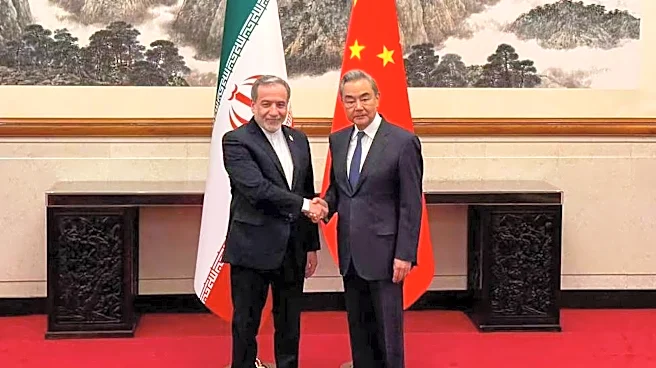
The U.S. is likely to continue its military presence in the region to deter further Iranian aggression and protect commercial shipping. Diplomatic efforts may intensify as both sides seek to avoid a full-scale conflict. However, the path to a lasting agreement remains uncertain, with significant obstacles to overcome. The international community will be watching closely, as any escalation could have serious consequences for regional stability and global economic security.