







What's Happening?
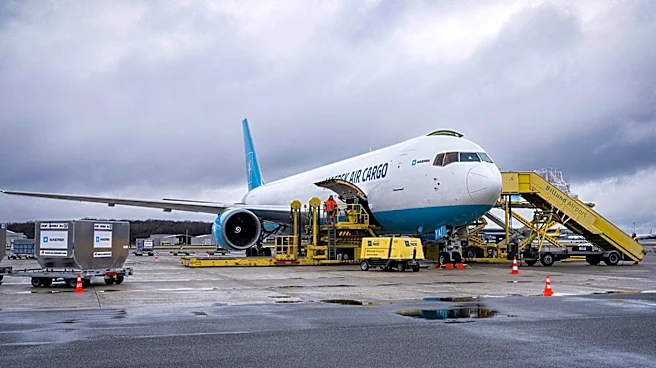
Western Sydney International Airport (WSI) has officially commenced its commercial freight flight operations. The airport's 24-hour Cargo Precinct is now operational, capable of handling a significant volume of air cargo. The first stage of the precinct
can accommodate eight 747 or 777 freighters or 16 737 or A320 domestic freighters simultaneously. This development is expected to support New South Wales' high-value industries, including fresh meat and seafood, pharmaceuticals, agricultural exports, electronics, and advanced manufacturing. Key partners such as Qantas Freight, Menzies Aviation, dnata Cargo, dnata Catering & Retail, and Texel Air have signed on to utilize the Cargo Precinct, which aims to handle up to 1.8 million tonnes of air cargo annually. The airport recently completed cargo trial flights with a Qantas A321 aircraft, marking the beginning of its freight operations.
Why It's Important?
The launch of commercial freight operations at WSI is a significant development for the logistics and transportation sectors in Australia. By enhancing cargo capacity, the airport is poised to become a critical hub for air freight, supporting various industries that rely on timely and efficient transportation of goods. This move is expected to boost the local economy by facilitating exports and imports, thereby strengthening trade links. Additionally, the ability to transport perishable goods quickly will benefit industries such as agriculture and pharmaceuticals, ensuring that products reach their destinations in optimal condition. The involvement of major players like Qantas Freight and dnata highlights the strategic importance of WSI in the region's logistics network.
What's Next?
With the commencement of freight operations, WSI is set to expand its services further. The airport plans to begin passenger flights on October 25, which will mark another milestone in its development. As the Cargo Precinct grows, it is expected to attract more businesses and increase its cargo handling capacity. The success of these operations could lead to further investments in infrastructure and technology, enhancing the airport's efficiency and competitiveness. Stakeholders, including government officials and industry leaders, will likely monitor the airport's performance closely to assess its impact on the regional and national economy.