





What's Happening?
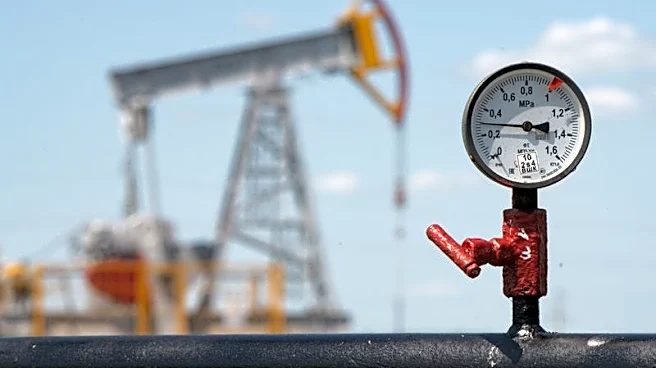
During the 41st OPEC and non-OPEC Ministerial Meeting, participating countries reaffirmed their commitment to the Declaration of Cooperation, aiming to maintain a stable oil market. The agreement, originally signed in 2016, continues to guide the production
levels of both OPEC and non-OPEC countries. The meeting emphasized the importance of the Joint Ministerial Monitoring Committee in overseeing compliance and market conditions. This reaffirmation comes amid ongoing geopolitical tensions and market volatility, particularly due to the conflict in the Middle East affecting oil supply routes.
Why It's Important?
The reaffirmation of production levels by OPEC and non-OPEC countries is crucial for maintaining market stability in a time of geopolitical uncertainty. The ongoing conflict in the Middle East has disrupted oil supply chains, leading to price volatility and economic uncertainty. By committing to the Declaration of Cooperation, these countries aim to provide a measure of predictability and stability to global oil markets, which is vital for economic planning and energy security. This decision impacts global oil prices and has significant implications for economies dependent on oil imports.
What's Next?
The Joint Ministerial Monitoring Committee will continue to play a key role in monitoring compliance and market conditions, with potential adjustments to production levels as necessary. The ongoing geopolitical tensions and their impact on oil supply routes will be closely watched by market participants. Future meetings will likely address any changes in market dynamics and the need for further cooperation among oil-producing countries to ensure market stability.