



What's Happening?
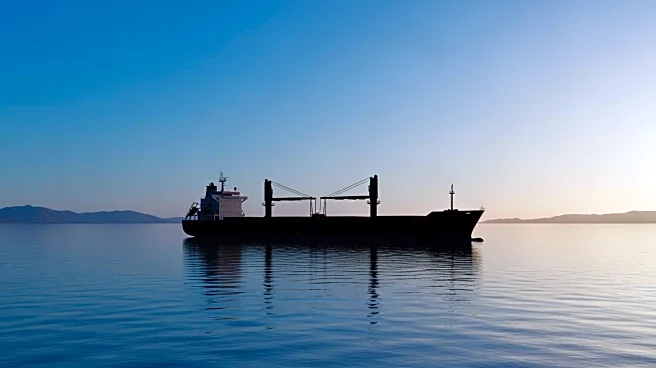
Danish shipping company Maersk has announced that one of its vessels successfully navigated the Red Sea and Bab el-Mandeb Strait for the first time in nearly two years. This development comes as shipping companies consider returning to the critical Asia-Europe
trade corridor following a ceasefire in Gaza. Maersk has indicated that while there are no firm plans to fully reopen the route, the company will adopt a 'stepwise approach towards gradually resuming navigation' via the Suez Canal and the Red Sea. The company has not provided further details on its plans, but this move marks a significant step in potentially re-establishing a vital shipping route that has been largely inactive due to regional conflicts.
Why It's Important?
The successful navigation of the Red Sea by Maersk's vessel is significant as it suggests a potential reopening of a major trade route that connects Asia and Europe. This corridor is crucial for global trade, and its reopening could have substantial economic implications. For the shipping industry, resuming operations in this region could lead to increased efficiency and reduced costs, as the Suez Canal is a key shortcut for maritime trade. Additionally, the ceasefire in Gaza may provide a more stable environment for shipping companies to operate, potentially leading to increased trade and economic activity in the region. Stakeholders in the shipping and logistics sectors, as well as businesses reliant on these trade routes, stand to benefit from a resumption of activity.
What's Next?
As Maersk takes a cautious approach to resuming navigation through the Red Sea, other shipping companies may follow suit, assessing the security and economic viability of the route. The broader impact on global trade will depend on the stability of the ceasefire and the willingness of other companies to re-engage with the route. Additionally, regional political developments and security conditions will play a critical role in determining the pace and extent of the route's reopening. Stakeholders will likely monitor the situation closely, with potential adjustments to shipping schedules and routes based on evolving conditions.