







What's Happening?
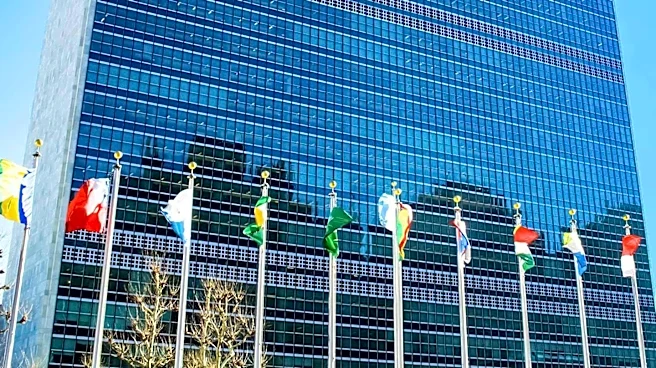
The United Nations is confronting increasing calls for structural reform to enhance its relevance and effectiveness in a rapidly evolving global landscape. A recent public dialogue in New Delhi, involving young changemakers and current and former UN leaders,
highlighted the need for the organization to adapt to contemporary geopolitical pressures, the impacts of climate change, and the unchecked advancement of Artificial Intelligence. Participants discussed the UN's role and efficacy, with UN India Resident Coordinator Stefan Priesner emphasizing the UN's continued relevance despite the difficulties of reform due to diverse national interests. Ambassador of Norway to India, May-Elin Stener, underscored the importance of multilateralism, citing a new initiative by Norway and Finland to control frontier AI models as an example of global cooperation. Member of Parliament Dr. Shashi Tharoor questioned if any other organization could unite all countries for common humanity, advocating for making the best of the existing UN despite its limitations.
Why It's Important?
The push for UN structural reform is critical for the United States and the international community as it directly impacts global stability, security, and cooperation on transnational issues. A more effective and legitimate UN could better address crises, facilitate humanitarian aid, and coordinate responses to global threats like pandemics and climate change, which have direct implications for U.S. national interests and security. The debate over reform also touches upon the distribution of power and influence within the UN, particularly regarding the Security Council, which could alter the dynamics of international diplomacy. If the UN fails to adapt, its capacity to mediate conflicts, enforce international law, and promote human rights could diminish, potentially leading to a more fragmented and less predictable global order, impacting U.S. foreign policy objectives and economic interests.
What's Next?
The discussions surrounding UN structural reform are expected to continue, with various stakeholders advocating for different approaches. The UN Secretary-General António Guterres has previously emphasized the need to regenerate legitimacy and effectiveness to yield tangible impact, suggesting that internal efforts for reform will persist. Initiatives like the one led by Norway and Finland to control frontier AI models demonstrate a proactive approach to addressing new global challenges through multilateralism, which could serve as a model for future UN engagements. The ongoing dialogue will likely focus on how to balance diverse national interests with the overarching goal of a more unified and responsive international body, potentially leading to proposals for changes in governance, representation, and operational strategies to better serve global needs.
Beyond the Headlines
Beyond the immediate discussions on structural reform, the underlying implications point to a fundamental re-evaluation of multilateralism in the 21st century. The weaponization of factors that once brought nations closer, as noted in the dialogue, highlights a deeper erosion of trust and cooperation. The challenge extends beyond mere procedural changes within the UN to fostering a renewed commitment among member states to collective action over narrow national interests. The rise of AI and climate change as dominant global concerns also introduces ethical and existential dimensions that demand unprecedented levels of international collaboration. The success or failure of UN reform will not only determine the future of the organization but also the capacity of humanity to collectively address complex, interconnected global challenges, shaping the ethical frameworks and governance structures for emerging technologies and environmental stewardship.