




What's Happening?
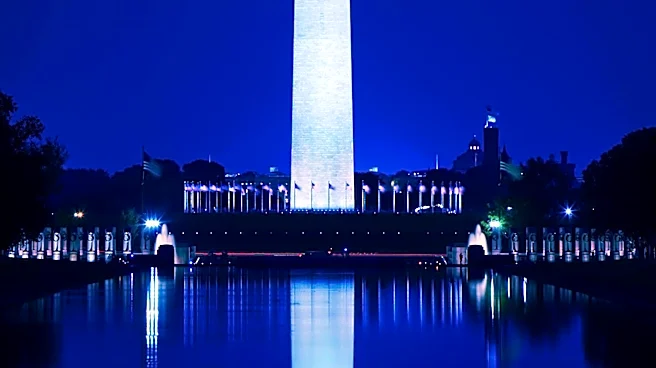
The Washington Monument, standing at nearly 555 feet, is a prominent symbol in the nation's capital. Its history is marked by controversy and debate over its design and purpose. Initially proposed as a grand equestrian statue, the monument's final form
as an obelisk was chosen after decades of disputes. The monument's construction was delayed by political disagreements and funding challenges, reflecting broader national debates about leadership and identity. The Washington National Memorial Society, formed in 1833, played a key role in advancing the project, ultimately leading to the completion of the monument in the late 19th century.
Why It's Important?
The Washington Monument serves as a powerful symbol of American ideals and the complexities of national identity. Its history highlights the challenges of commemorating historical figures in a way that resonates with diverse political and cultural perspectives. The monument's evolution from a proposed equestrian statue to an obelisk reflects changing attitudes towards leadership and representation in a republic. As a focal point in the nation's capital, the monument continues to inspire reflection on the values and conflicts that have shaped the United States.
Beyond the Headlines
The Washington Monument's history underscores the ongoing debates about how to honor historical figures and events. The monument's design and construction were influenced by competing visions of national identity, a theme that remains relevant in contemporary discussions about public monuments and memorials. The monument's role as a symbolic battleground for national values highlights the enduring impact of historical narratives on public memory and identity.