


What's Happening?
Muscat, Oman, has emerged as a crucial hub for Middle Eastern air travel following disruptions caused by U.S. and Israeli strikes on Iran. With most Gulf countries closing their airspace, Oman has kept its airspace open, allowing airlines and governments
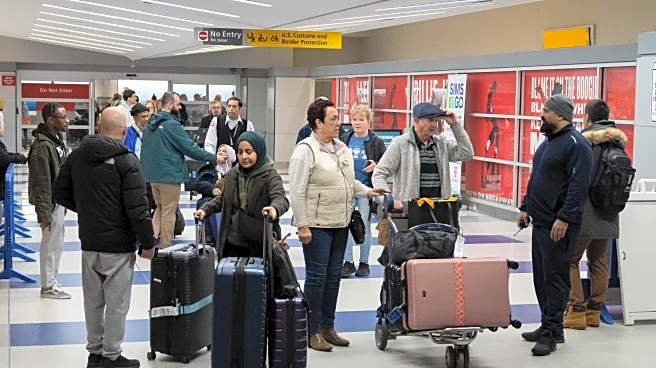
to use it as a transit point for repatriating citizens. This has led to a significant increase in flights from Muscat, with 144 flights departing on a recent Thursday compared to 125 the previous week. The demand has pushed Oman's infrastructure to its limits, with Oman Air advising passengers to arrive at border crossings 12 hours before departure. The situation has also seen a shift in popular destinations, with Cairo and Istanbul becoming key transit points for onward travel to Europe and beyond.
Why It's Important?
The shift of air travel operations to Muscat highlights the strategic importance of Oman in regional geopolitics and aviation. As a neutral player with open airspace, Oman is facilitating critical repatriation efforts and maintaining connectivity in a region experiencing heightened tensions. This development underscores the vulnerability of global travel networks to geopolitical events and the importance of having alternative routes and hubs. For airlines, this situation presents both challenges and opportunities, as they navigate logistical complexities while potentially expanding their networks through new routes. The increased traffic through Muscat also emphasizes the need for robust infrastructure to handle sudden surges in demand.
What's Next?
As the situation evolves, airlines and governments will likely continue to rely on Muscat as a transit hub until regional tensions subside and airspace restrictions are lifted. Oman Airports has expressed readiness to support airlines by facilitating regulatory approvals, indicating a potential for long-term partnerships and increased traffic even after the current crisis. The UAE's partial reopening of its airspace suggests a gradual return to normalcy, but the timeline remains uncertain. Airlines may need to adjust their operations and schedules dynamically in response to changing geopolitical conditions.