





What's Happening?
Ukraine's Defense Ministry has announced plans to contract 25,000 unmanned ground vehicles (UGVs) in the first half of 2026, more than doubling the total from 2025. This initiative aims to shift all frontline logistics from soldiers to robots, enhancing
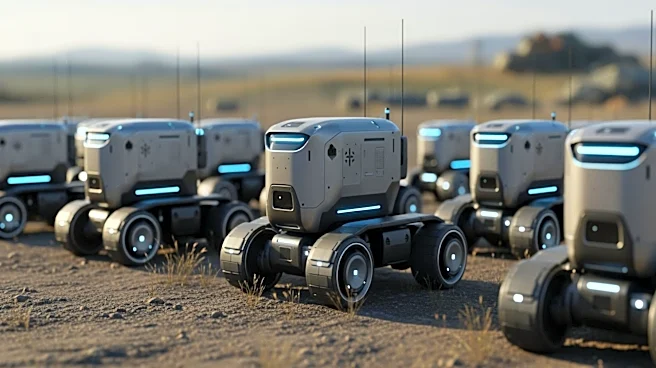
operational efficiency and safety. Defense Minister Mykhailo Fedorov revealed that the ministry has already begun signing contracts for 2027 to ensure a stable supply chain for manufacturers. The UGVs are tasked with crucial logistics and evacuation operations on the front lines, with over 9,000 missions conducted in March alone. The ministry has invested over 14 billion hryvnia (approximately $330 million) to supply more than 181,000 drones, UGVs, and electronic warfare systems to the front since January. The Bizon-L, a logistics robot with a 300-kilogram payload and a 50-kilometer range, has been codified under NATO standards and cleared for operational use.
Why It's Important?
The deployment of UGVs represents a significant technological advancement in military logistics, potentially reducing human casualties by removing soldiers from dangerous frontline tasks. This shift underscores Ukraine's commitment to integrating advanced technology into its defense strategy, which could influence military tactics globally. The initiative also highlights the growing role of unmanned systems in modern warfare, setting a precedent for other nations. The investment in UGVs and related technologies could stimulate Ukraine's defense industry, fostering innovation and economic growth. Additionally, the use of unmanned systems aligns with global trends towards automation and digitalization in military operations.
What's Next?
Ukraine's defense leaders are tasked with scaling the production of tens of thousands of UGVs to cover 1,200 kilometers of frontline within the year. This ambitious goal will require coordination with domestic manufacturers and the Brave1 defense-tech cluster, which supports the development and deployment of these technologies. The success of this initiative could lead to further integration of unmanned systems in other military operations and potentially influence NATO allies to adopt similar strategies. The ongoing conflict in Ukraine may see increased reliance on these technologies, potentially altering the dynamics of warfare in the region.
Beyond the Headlines
The use of unmanned systems in warfare raises ethical and legal questions about the role of technology in combat. The reliance on robots for frontline logistics could lead to debates about the implications for human soldiers and the nature of warfare. Additionally, the integration of advanced technology in military operations may necessitate new regulations and frameworks to address potential challenges, such as cybersecurity threats and the ethical use of autonomous systems. The long-term impact of this technological shift could redefine military strategies and the global defense landscape.