





What's Happening?
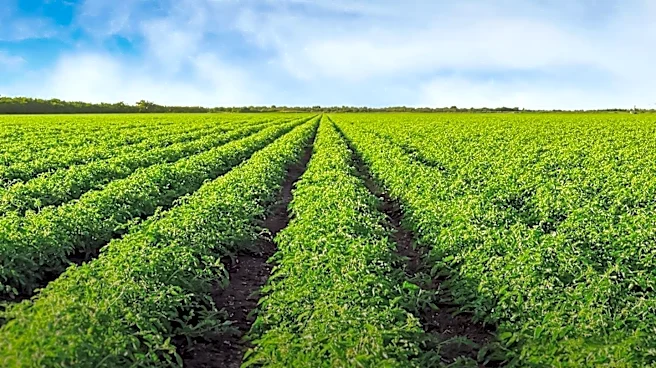
A new Yale-led study has revealed that farmers in the Mississippi River Basin are storing more carbon dioxide (CO2) in the soil than they emit by adding limestone to their fields, a practice known as 'liming.' This finding, published in the journal Nature,
challenges conventional greenhouse gas accounting methods, including those used by the Intergovernmental Panel on Climate Change (IPCC), which typically treat the carbon in applied lime as emitted CO2. The study, led by geochemist Tim Jesper Suhrhoff, a postdoctoral associate at the Yale Center for Natural Carbon Capture, analyzed over a century of data. It concludes that agricultural liming, which involves spreading crushed limestone to raise soil pH, reduce acidity, and increase crop yields, results in net carbon removal in the long term. This is because the limestone reacts with CO2 in the soil to form stable bicarbonate ions that can travel through soils, groundwater, and rivers, eventually reaching the ocean where the carbon can be stored for extended periods.
Why It's Important?
This research has significant implications for agricultural soil management across the American heartland and potentially globally. The Mississippi River Basin covers 41% of the contiguous United States and approximately 65% of U.S. croplands, making the widespread practice of liming a substantial factor in national carbon sequestration efforts. The study highlights a synergy between climate action and agricultural benefits, as improved soil pH management not only enhances crop yields and soil health but also contributes to CO2 removal from the atmosphere. By providing a more complete picture of the liming process, the study suggests that current greenhouse gas accounting frameworks may be underestimating the carbon removal potential of this agricultural practice. Recognizing liming as a carbon sink could incentivize more farmers to adopt or continue this practice, aligning economic benefits for farmers with broader climate mitigation goals.
What's Next?
The findings suggest a need for re-evaluation of how agricultural liming is treated in greenhouse gas accounting methodologies, such as those from the IPCC. A more complete framework that acknowledges liming's net carbon removal could better align climate and agricultural incentives. The researchers, including Noah Planavsky, a professor of Earth and planetary science at Yale, indicate that these data present an opportunity to scale up enhanced weathering by supporting more farmers in conducting agricultural liming. This could involve exploring funding mechanisms that account for the carbon removals achieved through liming, especially since many farmers currently cannot afford optimal soil pH management. While the Mississippi River Basin results may not directly transfer to every agricultural setting due to local factors like existing soil acidity and hydrology, the study provides a strong basis for further research and policy adjustments.
Beyond the Headlines
The study delves into the deeper implications of agricultural practices on climate change mitigation, particularly the concept of 'enhanced weathering.' While enhanced weathering has often focused on silicate rocks, this research brings renewed attention to carbonate-based methods like liming. It underscores the ethical and economic dimensions of climate action, demonstrating how practices beneficial to farmers' livelihoods can also serve environmental goals. The historical data spanning over 120 years provides a unique long-term perspective on the effectiveness of such interventions. This shift in understanding could lead to a re-evaluation of agricultural subsidies and carbon credit programs, potentially creating new economic opportunities for farmers who implement liming. It also highlights the complexity of carbon cycles and the need for nuanced accounting that considers the full lifecycle and interactions of agricultural inputs with the environment.