




What's Happening?
Buncombe County, North Carolina, has unanimously approved a $1.6 million contract with Raleigh-based Method Studio for the design and oversight of a new indoor recreation facility at the Buncombe County Sports Park in Enka-Candler. This facility marks
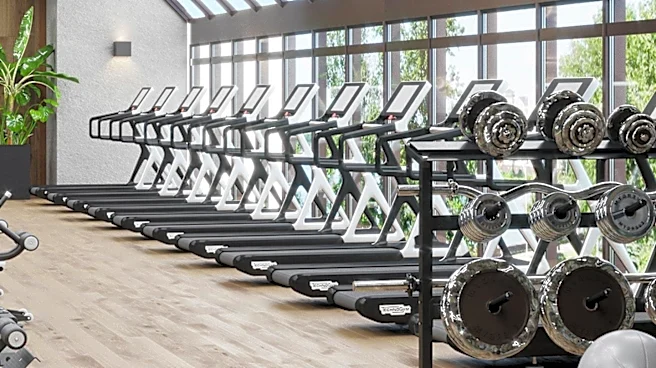
the county's first major indoor space to be managed by its parks and recreation system. While primarily a recreation center, the design firm's contract refers to it as a 'Community Resiliency Center,' incorporating features such as rooftop solar with battery storage, an emergency power generator, a rainwater capture cistern, and medical supply storage. The facility is planned to include two high-school regulation basketball/volleyball courts, spectator seating, locker rooms, offices for the Parks and Recreation Department, a catering kitchen, and conference rooms. Its gym space will be flexible for community events or voting. The exact location within the sports park is still being determined, with a likely spot at the entrance on the former Sand Hill Elementary School site, chosen for its flood resistance and potential for additional entrances and exits. The total estimated cost for the project is $19.69 million, with completion anticipated in early 2029.
Why It's Important?
This project is significant for Buncombe County as it addresses multiple community needs, from recreational facilities to disaster preparedness. The inclusion of resilience features like a rainwater capture cistern, solar power, and emergency generators positions the facility as a critical asset during natural disasters, offering a safe and functional hub for residents. This proactive approach to infrastructure development reflects a growing trend in U.S. communities to integrate climate resilience into public projects, ensuring continuity of services and safety in the face of increasing environmental challenges. The facility's dual purpose as a recreation center and emergency hub maximizes its utility and community value, potentially serving as a model for other counties looking to enhance their public infrastructure. Furthermore, the investment in a county-managed indoor recreation space expands access to sports and community activities, promoting public health and social engagement.
What's Next?
The next phase involves Method Studio developing the detailed design for the facility. During this period, more specifics regarding the project's footprint and potential impacts on existing facilities within the sports park, such as a dog park, community garden, and tree nursery, will be determined. County officials plan to engage with stakeholders to discuss relocation options and solutions for any affected elements. Construction is estimated to take approximately two and a half years, with completion projected for early 2029. The county will also need to secure the remaining funding for the estimated $19.69 million project. As the design progresses, further clarity is expected on the extent to which the 'Community Resiliency Center' vision, including the rainwater capture cistern and other emergency features, will be fully realized in the final construction.
Beyond the Headlines
The emphasis on 'Community Resiliency Center' in the design contract, even if the county primarily views it as a recreation center, highlights a broader societal shift towards integrating disaster preparedness into everyday infrastructure. This approach acknowledges the increasing frequency and intensity of natural disasters and the need for local communities to be self-sufficient during emergencies. The rainwater capture cistern, for instance, is not just an environmental feature but a critical component for water security during power outages or disruptions to municipal water supplies. This project could set a precedent for how public buildings are conceived and funded, moving beyond single-purpose facilities to multi-functional spaces that serve both daily community needs and critical emergency functions. It also underscores the evolving role of local government in addressing climate change impacts and ensuring community safety and well-being.