
What's Happening?
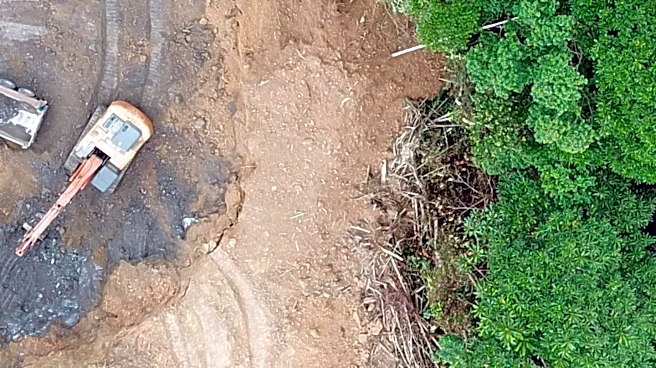
Brazil has reported the lowest level of deforestation alerts in the Amazon in a decade, with a 36% decrease in deforested areas between August 2025 and July 2026. The data, released by the National Institute
for Space Research (INPE), shows a significant reduction in deforestation, attributed to the current administration's environmental policies. This development comes amidst trade tensions with the United States, where President Trump's administration imposed additional tariffs on Brazilian products, citing deforestation as a reason. The Brazilian government has celebrated the reduction as a major achievement, particularly in an election year when deforestation rates typically rise.
Why It's Important?
The reduction in deforestation is a critical step for Brazil in addressing climate change and improving its international environmental standing. The Amazon rainforest is a vital carbon sink, and its preservation is crucial for global climate stability. The decrease in deforestation could also impact Brazil's trade relations, particularly with the United States, by countering arguments used to justify tariffs. This development highlights the importance of effective environmental policies and international cooperation in addressing global challenges. It also sets a precedent for other countries facing similar environmental and trade issues.
What's Next?
Brazil is expected to continue its efforts to reduce deforestation, with official data releases in November providing further insights. The upcoming elections will likely focus on environmental policies, with President Lula's administration emphasizing its achievements in reducing deforestation. Internationally, Brazil's actions may influence other countries' environmental strategies and trade negotiations. Continued monitoring and enforcement of anti-deforestation measures will be essential to sustain progress. The global community will be watching closely, as Brazil's success could serve as a model for other nations.