


What's Happening?
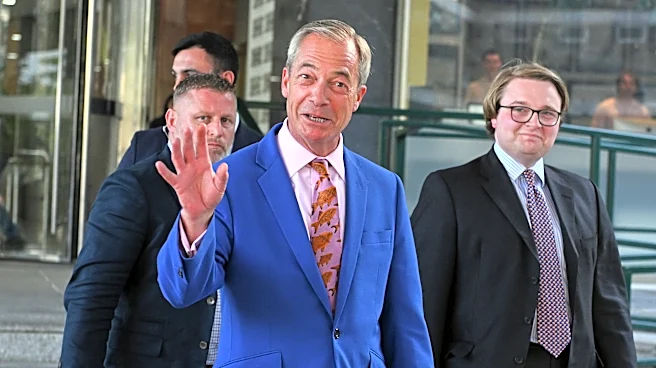
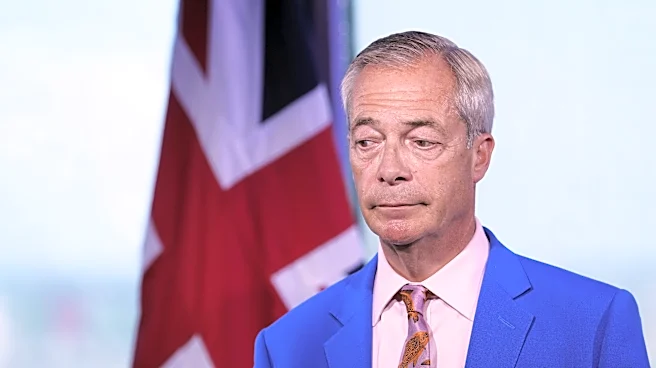
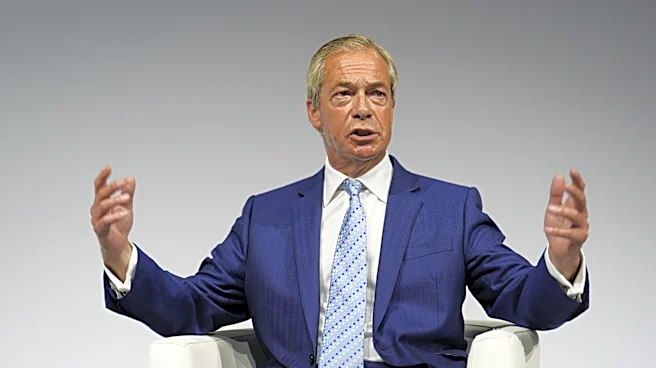
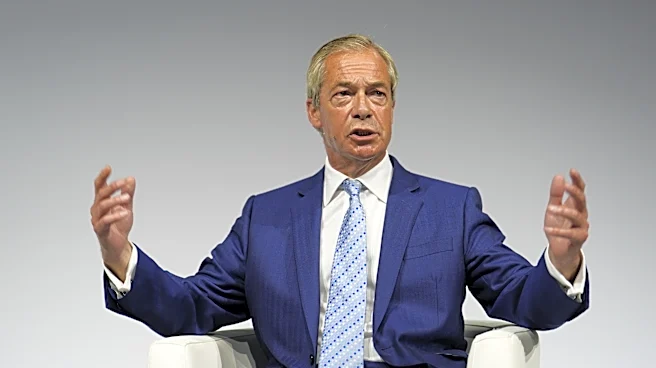
Nigel Farage, leader of the Reform UK party, has resigned as a lawmaker, triggering a special election in Clacton-on-Sea, UK. This move comes amid allegations of undeclared financial donations. Farage intended for his constituents to judge his actions,
but the decision has been dismissed as a stunt by major political parties, including Labour, Conservative, and Liberal Democrats, who have chosen to boycott the election. This leaves Farage's main opponent as 'Count Binface,' a comedian known for satirical political campaigns. The situation has drawn significant media attention, highlighting the unusual nature of the election and the broader political implications for Farage.
Why It's Important?
This development underscores the challenges faced by populist leaders like Farage, who are often scrutinized for their financial dealings. The boycott by major parties suggests a strategic move to delegitimize Farage's actions and focus public attention on the allegations against him. The presence of a satirical candidate like Count Binface highlights the role of humor and satire in political discourse, potentially influencing voter perceptions and engagement. The outcome of this election could impact Farage's political career and the future of the Reform UK party, which has been gaining traction in recent polls.
What's Next?
As the election approaches, Farage will likely continue to campaign vigorously, aiming to secure public support despite the controversy. The absence of major party candidates could lead to an unconventional election outcome, with Count Binface potentially attracting a significant protest vote. The election results will be closely watched as an indicator of public sentiment towards Farage and the broader political landscape in the UK. Additionally, the handling of the financial allegations against Farage will remain a critical issue, potentially influencing future political dynamics.