





What's Happening?
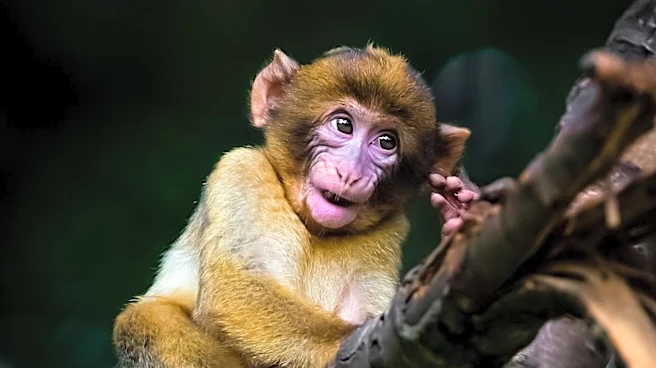
China's pharmaceutical industry is experiencing a significant shortage of lab monkeys, crucial for drug development, as demand for primate safety data surges. The price for cynomolgus macaques has doubled over the past year, reaching approximately $26,294
each. This increase is attributed to China's expanding role in the global drug pipeline, now accounting for a third of it. The shortage is not due to a supply collapse but rather a dramatic rise in demand, as China becomes a top destination for clinical trials. The scarcity of lab monkeys is delaying drug trials and preclinical studies, with some projects facing delays of up to ten months. This situation is exacerbated by regulatory requirements that monkeys used in testing must be at least three years old, meaning the current shortfall cannot be quickly resolved through breeding.
Why It's Important?
The shortage of lab monkeys in China has significant implications for the global pharmaceutical industry. As China plays a pivotal role in drug development, delays in clinical trials could impact the availability of new treatments worldwide. The increased cost and scarcity of primates may also drive up research and development expenses, potentially affecting drug pricing. Furthermore, the situation highlights the ethical and logistical challenges of relying on animal testing in drug development. The bottleneck could push companies to explore alternative testing methods, such as in vitro or computational models, to mitigate reliance on primates.
What's Next?
To address the shortage, China may need to increase imports of lab monkeys, particularly from countries like Cambodia, which have resumed exports after a pandemic-related halt. Additionally, the pharmaceutical industry might accelerate the development of alternative testing methods to reduce dependency on primates. Regulatory bodies could also consider revising guidelines to facilitate faster approval processes for alternative testing methods. The situation may prompt international collaboration to ensure a stable supply of lab animals and explore ethical alternatives.
Beyond the Headlines
The reliance on primates for drug testing raises ethical concerns about animal welfare and the sustainability of current practices. The shortage could catalyze a shift towards more humane and innovative testing methods, potentially leading to regulatory changes. This development also underscores the interconnectedness of global supply chains and the impact of geopolitical factors on scientific research. As China continues to expand its influence in the pharmaceutical sector, the industry may face increased scrutiny regarding ethical standards and environmental sustainability.