
What's Happening?
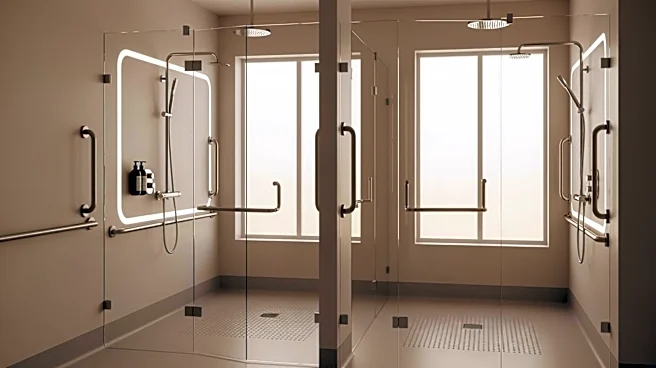
A new shower design has been implemented at the Specialized Dementia Unit of the University Health Network’s Toronto Rehab University Centre, aiming to improve the care experience for individuals living
with dementia. The design, led by Dr. Andrea Iaboni, focuses on creating a serene and calming environment to reduce stress and disorientation during showering. The project originated from the Design for Health Spatial Studio at OCAD University, where students developed concepts based on evidence-based design processes. The final design, executed by Kasian Architecture, incorporates biophilic elements such as wood and natural colors, along with features like soft lighting, reduced glare, and slip-resistant flooring. The space is designed to be accessible and patient-centered, prioritizing comfort, dignity, and ease of use.
Why It's Important?
This development is significant as it addresses a common challenge in dementia care environments, where unfamiliar and stressful settings can exacerbate patients' conditions. By creating a more calming and accessible shower space, the design aims to enhance the quality of life for dementia patients, potentially reducing anxiety and improving overall well-being. This approach reflects a growing trend in healthcare design that emphasizes patient-centered care and the use of evidence-based practices to create environments that support healing and comfort. The project also highlights the importance of collaboration between designers, healthcare professionals, and those with lived experience in shaping effective care solutions.
What's Next?
The success of this project could inspire similar initiatives in other healthcare facilities, promoting the adoption of human-centered design principles in environments for vulnerable populations. As the healthcare industry continues to evolve, there may be increased interest in integrating biophilic and evidence-based design elements into various care settings. Stakeholders, including healthcare providers and design professionals, may explore further collaborations to enhance patient experiences and outcomes through innovative design solutions.
Beyond the Headlines
The project underscores the potential for design to play a transformative role in healthcare, particularly in creating environments that cater to the specific needs of patients with cognitive impairments. It also raises awareness about the importance of involving patients, families, and caregivers in the design process to ensure that spaces are truly responsive to their needs. This approach could lead to broader discussions about the role of design in promoting mental health and well-being across different care settings.