





What's Happening?
Somalia is currently experiencing another severe hunger crisis, with six million people facing acute food insecurity. The World Food Program (WFP) has reported that its available resources are only a tenth of what they were in 2022, a year when the agency
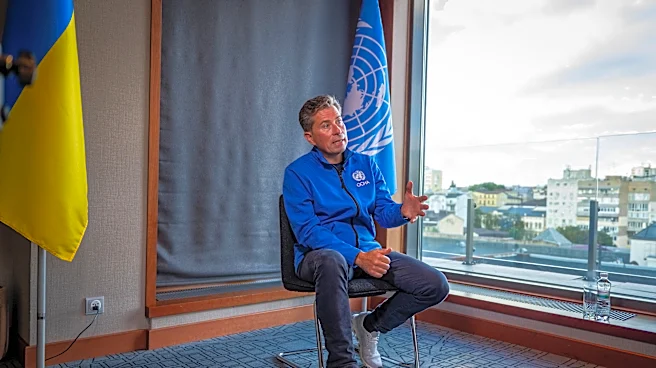
successfully averted a famine in the East African nation. Carl Skau, the WFP acting executive director, stated during a visit to Mogadishu that the organization can only provide the 'bare minimum' assistance, primarily focusing on the most severely affected children. This significant reduction in funds is attributed to cuts in international aid by donor countries and the reallocation of resources to other global humanitarian crises. As a result, the WFP is unable to expand its assistance efforts in Somalia, despite projecting that 1.9 million children under five will suffer acute malnutrition this year, with nearly 500,000 requiring urgent treatment for severe acute malnutrition. Approximately 30% of Somalia's population is currently facing critical levels of food insecurity.
Why It's Important?
The resurgence of a severe hunger crisis in Somalia, coupled with a drastic reduction in international aid, highlights a critical challenge in global humanitarian response. The WFP's inability to expand its assistance due to funding cuts means that millions of vulnerable individuals, particularly children, are at heightened risk of malnutrition and famine. This situation underscores the precariousness of food security in regions prone to drought and conflict, and the profound impact of shifting international priorities on the ground. The potential for widespread famine, which was narrowly avoided in 2022 due to robust WFP intervention, is now a significant concern. The crisis also brings into focus the ethical implications of resource allocation in a world facing multiple humanitarian emergencies, where decisions made by donor nations directly affect the survival of populations in crisis-stricken areas. The long-term consequences of widespread malnutrition, especially among children, include impaired physical and cognitive development, which can perpetuate cycles of poverty and instability.
What's Next?
The immediate future for Somalia's food crisis hinges on the potential for increased international funding and a re-evaluation of aid priorities. Without a significant influx of resources, the WFP will remain constrained in its ability to provide comprehensive assistance, likely leading to a worsening of the humanitarian situation. The agency has explicitly stated that it possesses the capacity and experience to address the crisis but lacks the necessary funds. Therefore, advocacy efforts by the WFP and other humanitarian organizations will likely intensify, urging donor countries to reconsider their aid allocations to Somalia. The coming months will reveal the extent of the crisis's impact, particularly on the projected 1.9 million children at risk of acute malnutrition. The international community will face increasing pressure to respond to the escalating needs, potentially through emergency funding appeals or re-prioritization of existing aid budgets. The long-term stability of Somalia could also be jeopardized if the food crisis is not adequately addressed, potentially exacerbating existing conflicts and displacement.
Beyond the Headlines
The current hunger crisis in Somalia extends beyond immediate food shortages, revealing deeper systemic issues related to global aid architecture and the interconnectedness of humanitarian crises. The redirection of resources to other emergencies, while understandable in a world with finite aid budgets, exposes a critical flaw in how international assistance is prioritized and sustained. This 'donor fatigue' or re-prioritization can have devastating consequences for populations in chronic crisis zones like Somalia, where resilience is constantly tested by environmental factors like drought and ongoing conflict. The situation also raises questions about the long-term sustainability of relying heavily on external aid for basic survival in vulnerable nations. It underscores the need for more robust, predictable, and equitable funding mechanisms for humanitarian response, as well as greater investment in long-term development and climate resilience strategies to prevent recurrent crises. The ethical dilemma of choosing which crisis to fund highlights the urgent need for a more holistic and preventative approach to global humanitarian challenges.