






What's Happening?
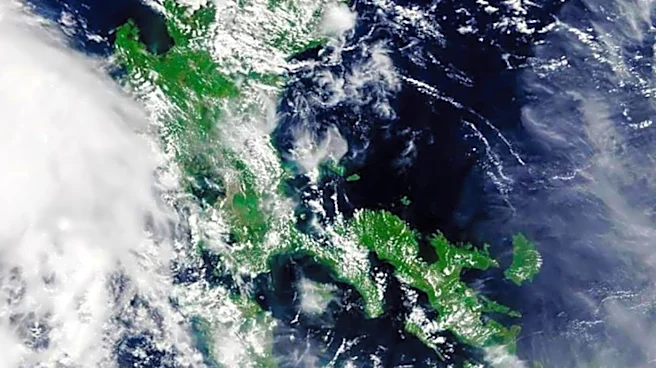
Typhoon Dolphin, classified as a 'very strong' storm, is advancing towards Japan, with Okinawa Island expected to experience its impact by Friday morning. The Japan Meteorological Agency has issued warnings as the typhoon, moving at 185 kilometers per hour,
approaches from the south. The storm has already affected the Ogasawara Islands with strong winds. Local authorities in Okinawa, home to 1.4 million people, are advising residents to prepare for potential evacuations and power outages. The typhoon is part of a series of severe weather events affecting the region, with previous storms like Typhoon Bavi causing significant disruptions.
Why It's Important?
The arrival of Typhoon Dolphin highlights the vulnerability of Japan's islands to severe weather events, which can lead to significant disruptions in daily life and economic activities. The storm poses risks to infrastructure, transportation, and public safety, necessitating coordinated emergency responses. The impact on Okinawa, a key strategic location with a significant U.S. military presence, underscores the importance of preparedness in mitigating the effects of natural disasters. The situation also draws attention to the broader challenges of climate change, which may increase the frequency and intensity of such storms.
What's Next?
As Typhoon Dolphin approaches, local governments are likely to implement emergency measures, including evacuations and securing infrastructure. The storm's progression will be closely monitored by meteorological agencies, with updates provided to ensure public safety. The aftermath may require significant recovery efforts, including restoring power and repairing damaged infrastructure. The event may also prompt discussions on improving disaster preparedness and resilience in the face of increasingly severe weather patterns.