
What's Happening?
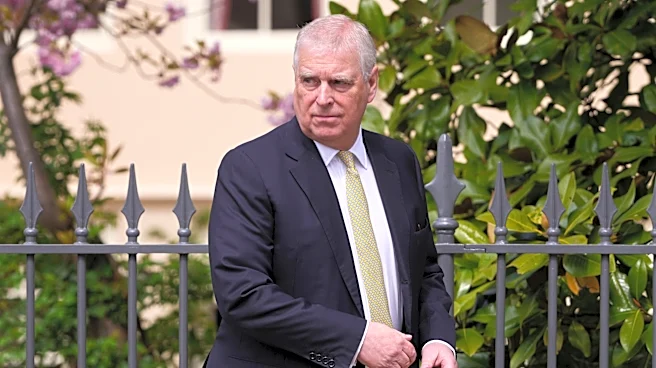
Recently released documents have revealed that Queen Elizabeth II was eager for her son, Prince Andrew, to be appointed as Britain's trade envoy in 2001. This decision, which faced little scrutiny from
government ministers, has been criticized in light of Andrew's controversial associations, particularly with Jeffrey Epstein. The documents suggest that the Queen's personal affection for Andrew may have influenced her decision-making, leading to a lack of decisive action in addressing allegations against him. Andrew served as a trade envoy until 2011, when concerns about his connections to questionable figures forced him to step down. The release of these documents has reignited discussions about the monarchy's role in public affairs and the implications of personal biases in official appointments.
Why It's Important?
The revelations about Queen Elizabeth's support for Prince Andrew's trade envoy role highlight the potential conflicts between personal relationships and public responsibilities within the monarchy. The lack of due diligence in Andrew's appointment raises questions about the processes governing royal involvement in public roles. This situation underscores the need for transparency and accountability in such appointments, especially when they involve individuals with controversial associations. The ongoing scrutiny of Andrew's past actions continues to affect the monarchy's reputation, emphasizing the importance of addressing public concerns to maintain trust and credibility.
What's Next?
The fallout from these revelations may prompt a reevaluation of how royal appointments are handled, with potential reforms to ensure more rigorous vetting processes. The monarchy may also face increased pressure to demonstrate transparency and accountability in its public engagements. As investigations into Andrew's past associations continue, the royal family will need to navigate the challenges of maintaining public confidence while addressing the complexities of personal relationships within its ranks.