


What's Happening?
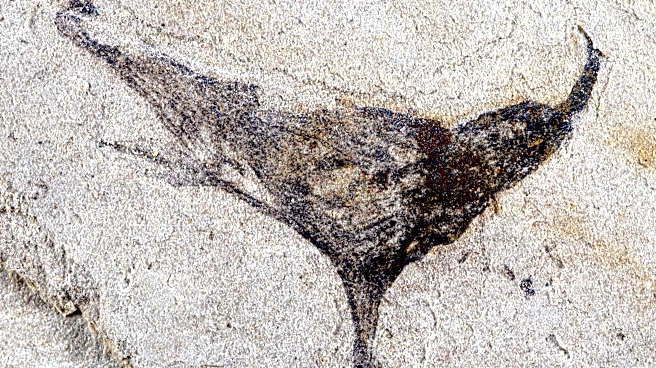
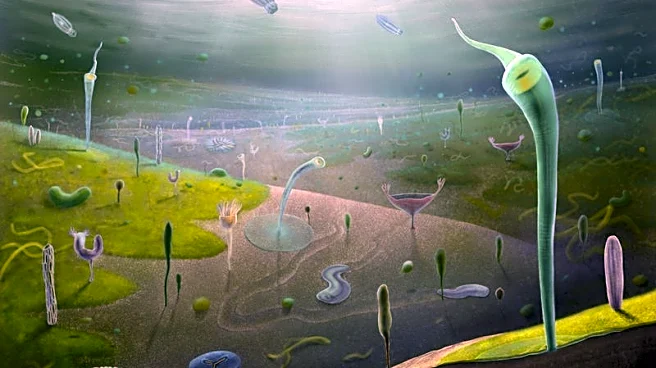
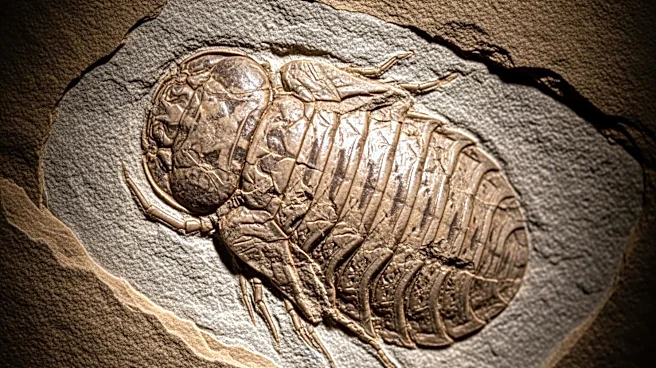
Fossils unearthed in China's Yunnan province have revealed that complex animal life may have emerged millions of years earlier than previously thought. These fossils, dating from the Ediacaran period, include a variety of organisms such as goblet-shaped
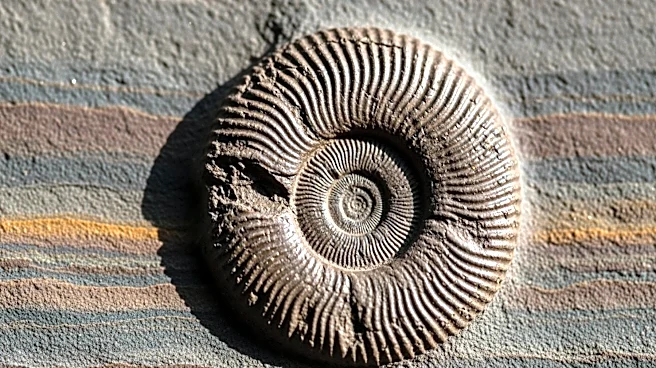
sea jelly relatives and wormlike creatures with holdfast discs. The discovery challenges the notion that complex life forms only appeared during the Cambrian period. The fossils were preserved in remarkable detail, allowing scientists to observe features like feeding structures and traces of internal organs. This suggests that complex animal life, potentially including ancestors of vertebrates, existed at least 4 million years before the Cambrian explosion.
Why It's Important?
This finding has profound implications for our understanding of the evolution of life on Earth. It suggests that the processes leading to the diversity of life forms began earlier than previously believed, potentially altering scientific theories about the timeline of evolution. The presence of bilateral symmetry in these fossils, a trait common in modern animals, indicates that significant evolutionary developments occurred before the Cambrian period. This discovery could lead to a reevaluation of the evolutionary history of vertebrates and other complex organisms, providing new insights into the origins of modern animal groups.
What's Next?
Researchers will continue to study these fossils to gain a deeper understanding of the biology and ecology of these ancient organisms. Further analysis could provide insights into the environmental conditions that allowed for such exceptional preservation and the evolutionary pathways that led to modern animal groups. The study of these fossils may also inform our understanding of the evolutionary relationships between ancient and modern species, potentially leading to new discoveries about the origins of vertebrates and other complex life forms.