
What's Happening?
Astronomy enthusiasts are advised to consider weather conditions and altitude when planning their observations. Bad seeing conditions are often present 24 hours after a weather front passes, affecting
the clarity of celestial observations. High-altitude locations can offer clearer skies but may require acclimatization due to lower oxygen levels, which can impact low-light color perception. Observers are also cautioned about the effects of bright sunlight on dark adaptation, as exposure can reduce visual sensitivity for several hours. Thin cirrus clouds can sometimes improve seeing conditions, but only if they are not accompanied by lower-level cross winds.
Why It's Important?
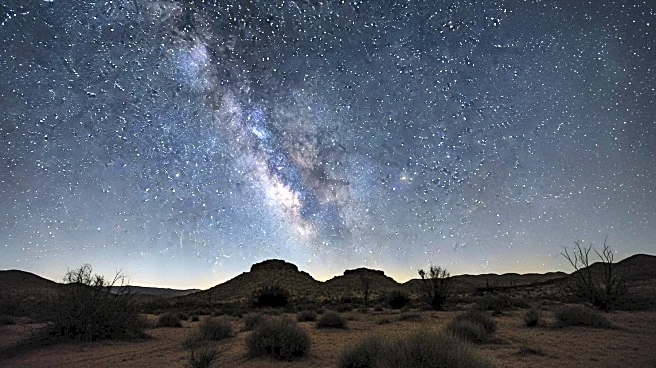
Understanding the impact of weather and altitude on astronomical observations is crucial for achieving successful viewing sessions. Observers can optimize their experiences by selecting sites with minimal light pollution and favorable weather conditions. High-altitude locations, while offering clearer skies, require preparation to mitigate the effects of hypoxia. Awareness of these factors allows astronomers to plan more effective observation sessions, enhancing their ability to capture clear and detailed images of celestial objects. This knowledge is particularly valuable for those interested in astrophotography and detailed sky observations.
What's Next?
Astronomers should continue to monitor weather forecasts and plan their observations accordingly. Selecting observation sites with favorable conditions, such as high altitudes and low light pollution, will improve the quality of their sessions. As weather patterns change, observers can adapt their plans to take advantage of optimal conditions. Continued education on the effects of altitude and weather on astronomical observations will benefit both amateur and professional astronomers in their pursuit of clear and detailed celestial images.