




What's Happening?
Representative Gregory W. Meeks, Ranking Member of the House Foreign Affairs Committee, has announced he will not clear the Trump administration’s proposed $2.8 billion sale of 40,000 2,000-pound bombs to Israel. Meeks cited concerns that these munitions,
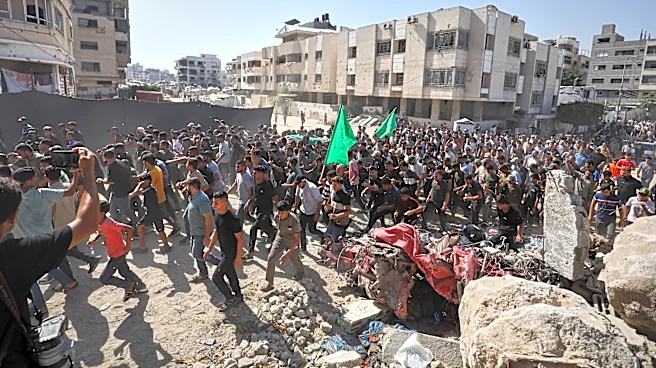
described as some of the most destructive in the U.S. arsenal, might not be used in accordance with U.S. and international law, particularly in densely populated areas like Gaza and Lebanon. He stated that the Trump administration has not provided sufficient assurances regarding the use of these weapons by the Netanyahu government, including appropriate protections for civilians. While reaffirming his commitment to Israel's security, Meeks emphasized Congress's responsibility to ensure that U.S.-funded weapons are used lawfully, responsibly, and with meaningful safeguards for human life.
Why It's Important?
This decision by Representative Meeks signifies a significant congressional check on the Trump administration's foreign policy and arms sales. Placing a hold on such a substantial weapons deal underscores concerns within Congress about the potential humanitarian impact of U.S.-supplied armaments in conflict zones. It highlights the ongoing tension between supporting allies' defense needs and ensuring adherence to international humanitarian law. The hold could delay or even prevent the sale, impacting Israel's military capabilities and potentially influencing its operational strategies. Furthermore, it signals a broader congressional desire to assert its oversight role in foreign arms sales, particularly when there are questions about civilian protection and the legal use of advanced weaponry.
What's Next?
With Representative Meeks placing a hold, the proposed $2.8 billion bomb sale to Israel will not proceed as planned at this time. The Trump administration will likely need to address the concerns raised by Meeks, providing more detailed assurances regarding the use of these weapons and civilian protection. This could involve further negotiations between the administration, Congress, and the Israeli government. The situation may also prompt broader discussions within Congress about the criteria and oversight mechanisms for future arms sales, especially to regions with ongoing conflicts. The outcome of this hold could influence future U.S. foreign policy decisions regarding military aid and arms transfers to other allies.
Beyond the Headlines
This action by Representative Meeks touches upon the complex ethical and legal dimensions of international arms sales. It brings to the forefront the debate over the responsibility of arms-exporting nations to ensure their weapons are used in compliance with international law and human rights standards. The specific mention of 'densely populated areas of Gaza and Lebanon' highlights the acute humanitarian concerns associated with powerful munitions in urban environments. This incident could contribute to a growing international discourse on arms control and accountability, potentially influencing global norms around military assistance and the protection of civilians in armed conflict. It also underscores the internal political dynamics within the U.S. regarding its role as a global arms supplier and its commitment to human rights.