




What's Happening?
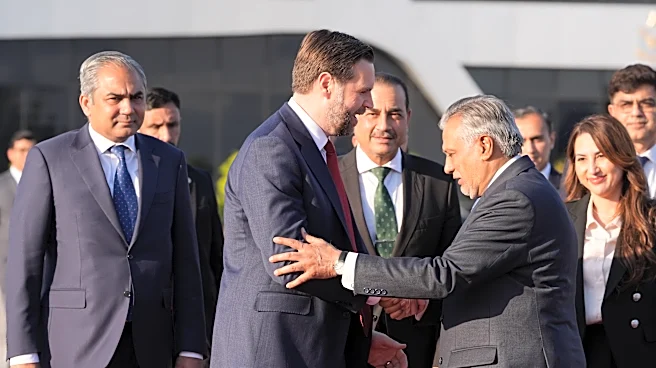
Ceasefire talks between the United States and Iran concluded in Islamabad, Pakistan, without reaching an agreement, raising concerns about the future of the fragile truce set to expire on April 22. The discussions, which lasted 21 hours, were aimed at resolving
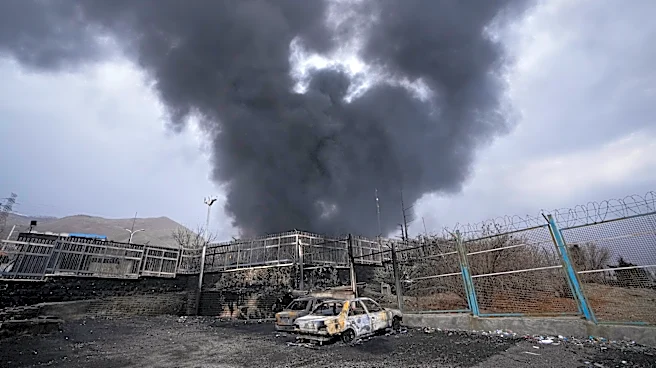
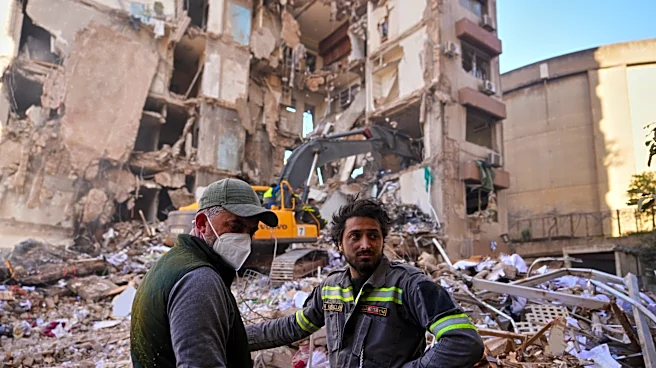
issues stemming from a 40-day conflict initiated by the US and Israel to dismantle Iran's nuclear and missile programs. The US presented a 15-point plan, including demands for reopening the Strait of Hormuz, which Iran had closed, causing global oil prices to spike. Iran countered with a 10-point plan, seeking control over the strait and compensation for war damages. Despite the lack of progress, both sides remain entrenched in their positions, with the US demanding Iran cease its nuclear ambitions and Iran insisting on its right to a civilian nuclear program.
Why It's Important?
The failure to reach an agreement in Islamabad highlights the ongoing tensions between the US and Iran, with significant implications for global energy markets and regional stability. The closure of the Strait of Hormuz by Iran has already impacted oil prices and global markets, underscoring the strategic importance of this waterway. The US's insistence on Iran abandoning its nuclear program reflects broader concerns about nuclear proliferation in the Middle East. The continuation of hostilities could further destabilize the region, affecting global economic conditions and potentially leading to increased military engagements.
What's Next?
With the ceasefire set to expire soon, both sides are expected to return to their respective capitals to reassess their positions. The US may continue to pressure Iran through diplomatic and economic means, while Iran may seek to strengthen its alliances in the region. The potential for renewed conflict remains high, and international stakeholders, including regional powers and global energy markets, will be closely monitoring developments. The possibility of further negotiations remains, but significant diplomatic efforts will be required to bridge the current divide.