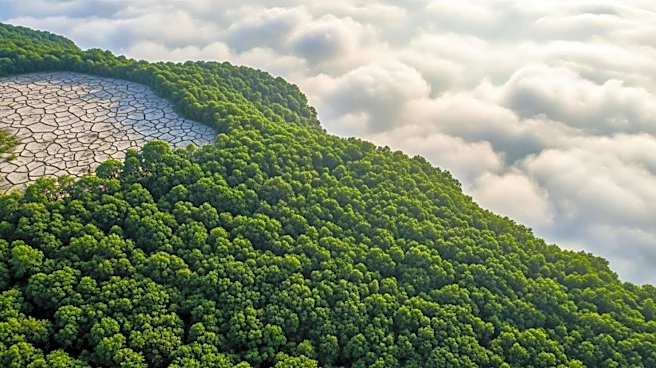

What's Happening?
In 2025, the rate of tropical primary forest loss decreased significantly, following a record high in 2024. According to satellite data from the University of Maryland's GLAD lab, tropical primary forest loss fell
by 36% from the previous year. Despite this improvement, the world still lost 4.3 million hectares of primary rainforest, and the long-term trend remains concerning. The decline is attributed to favorable climate conditions and policy changes, particularly in Brazil, where stronger enforcement and anti-deforestation programs have been effective. However, the underlying drivers of forest loss, such as agricultural expansion and climate variability, remain largely unchanged.
Why It's Important?
The reduction in forest loss is a positive development, but it highlights the ongoing challenges in achieving global deforestation targets. Forests play a critical role in carbon sequestration and biodiversity conservation, making their preservation essential for combating climate change. The situation underscores the need for sustained policy efforts and international cooperation to address the root causes of deforestation. The data also emphasizes the importance of monitoring and enforcement in countries like Brazil, where recent policy changes have shown promising results.
What's Next?
The future of global forest conservation will depend on the continuation of effective policies and the ability to adapt to changing climate conditions. The potential development of El Niño conditions in 2026 could pose new challenges, as it typically brings drier conditions that increase fire risk. Countries will need to prepare for these potential impacts and continue to strengthen their forest protection measures. Additionally, international support and funding will be crucial in helping countries implement sustainable land-use practices.
Beyond the Headlines
The decline in forest loss also raises questions about the balance between economic development and environmental conservation. As countries strive to meet economic goals, the pressure on forests for agricultural expansion and resource extraction remains high. This situation calls for innovative solutions that integrate economic and environmental objectives, ensuring that development does not come at the expense of critical ecosystems.