



What's Happening?
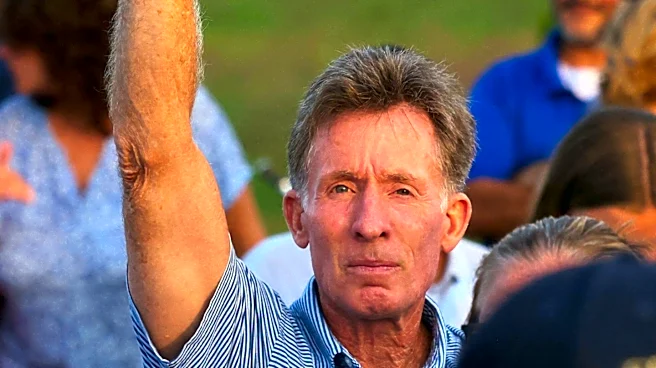
Timothy Miller, a 76-year-old man, has been charged with concealing his identity after wearing a burqa at an anti-migrant protest in Portsmouth, southern England. The incident occurred during a demonstration organized by the South Coast Patriots and Stand
Up To Racism groups. Hampshire Police had previously issued a Section 60AA order, which grants officers the authority to require protesters to remove masks or any other items used to obscure their identity. This measure was implemented to prevent crime and disorder, particularly after previous anti-migrant demonstrations in the area saw masked protesters and clashes. Miller was among several individuals arrested during the protest, which also involved confrontations between anti-migrant demonstrators and counter-protesters. He is scheduled to appear at Portsmouth Magistrates Court.
Why It's Important?
This event highlights the escalating tensions surrounding immigration in the UK and the measures authorities are taking to manage public order during protests. The police's use of a Section 60AA order underscores a proactive approach to prevent anonymity among demonstrators, which is often associated with an increased likelihood of violence or unlawful behavior. The charge against Miller, specifically for concealing identity, reflects the legal framework being applied to enforce these orders. The broader context of anti-migrant sentiment, as evidenced by the South Coast Patriots' involvement, indicates a societal divide on immigration policies. The clashes between opposing groups also signify the potential for civil unrest and the challenges law enforcement faces in maintaining peace during such demonstrations.
What's Next?
Timothy Miller is set to appear at Portsmouth Magistrates Court, where the legal proceedings regarding his charge of concealing identity at a protest will commence. This case could set a precedent for how similar incidents are handled under the Section 60AA order. Authorities will likely continue to monitor and manage future anti-migrant and counter-protests with similar measures, given the ongoing tensions. The outcome of Miller's case may influence how protesters choose to express themselves in future demonstrations, potentially leading to further legal challenges regarding freedom of expression versus public order concerns. The ongoing debate surrounding immigration in the UK is expected to continue, potentially fueling more protests and counter-protests.
Beyond the Headlines
The incident raises deeper questions about the balance between the right to protest and the state's power to maintain public order, particularly concerning the use of face coverings. While authorities argue that concealing identity can facilitate unlawful behavior, critics might view such restrictions as impinging on civil liberties and the right to anonymous protest. The choice of a burqa by a male protester also adds a layer of complexity, potentially being interpreted as a provocative act or a commentary on cultural and religious symbols within the context of immigration debates. This event reflects a broader trend in Western democracies where governments are increasingly grappling with how to manage public demonstrations in an era of heightened political polarization and social unrest, often leading to debates about surveillance, privacy, and the limits of protest.