








What's Happening?
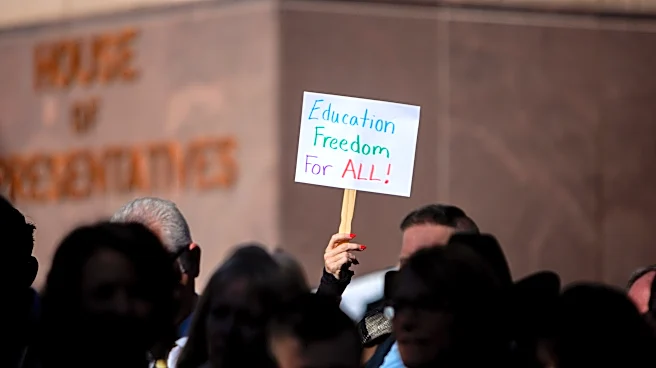
Advocates for school voucher reform in Arizona have admitted defeat, stating that the Protect Education Act (Proposition 212) will not qualify for the November ballot. This concession follows a mixed decision by the Arizona Supreme Court, which sent the case
back to a trial court to count signatures. Previously, a Maricopa County judge ruled that Republican-backed Proposition 145, which aimed to prevent the state from reclaiming ESA funds from military families and block future changes to these protections, could not appear on the ballot due to vague wording and a violation of the state’s single-subject rule. The Supreme Court upheld a lower court's decision to disqualify signature sheets where a gatherer listed a mailing address for a place they did not live. However, it overturned a trial court's decision to invalidate entire signature sheets due to another person's handwriting, stating only individual bad signature lines should be voided. Despite supporters claiming over 400,000 signatures, the overall outlook for the initiative remains unfavorable.
Why It's Important?
This development is significant for Arizona's education landscape and the ongoing debate surrounding school choice and public school funding. The failure of Proposition 212 means that proposed reforms, such as banning families earning over $150,000 annually from participating in the voucher program and returning unused ESA funds to public schools, will not be put before voters. This outcome is a setback for those advocating for stricter controls on school vouchers and increased funding for public education, as expressed by the Arizona Education Association President Marisol Garcia, who stated the ruling overturns the will of Arizona voters and harms underfunded public schools. Conversely, opponents of the voucher reform, like Victor Riches, president and CEO of the Goldwater Institute, view the decision as a win against what they perceive as efforts to restrict school choice. The legal challenges and the Supreme Court's nuanced ruling highlight the complexities and contentious nature of ballot initiatives and signature validation processes in Arizona, impacting future attempts to influence state policy through direct democracy.
What's Next?
With the Protect Education Act unlikely to appear on the November ballot, the immediate focus for school and education advocates will shift. Arizona Education Association President Marisol Garcia indicated that educators will dedicate the next 11 weeks to supporting 'pro-education candidates' to address the perceived harm to schools. This suggests a strategic pivot towards influencing policy through legislative means rather than direct ballot measures. The trial court will still proceed with counting the signatures for Proposition 212, but the advocates' admission of defeat indicates a low expectation of meeting the required 255,949 valid signatures. The legal precedent set by the Supreme Court's ruling on signature validation, particularly regarding individual bad signatures versus entire sheets, may influence future ballot initiative efforts in Arizona. The ongoing debate over school vouchers and public school funding is expected to continue, likely becoming a key issue in upcoming state legislative sessions and elections.
Beyond the Headlines
The defeat of Proposition 212 and Proposition 145 in Arizona underscores deeper tensions between different visions for education funding and policy. The conflict highlights the power dynamics between public education advocates, who often criticize voucher programs for diverting funds from public schools, and school choice proponents, who argue for parental autonomy and diverse educational options. The legal battles over ballot initiative wording and signature validity also reveal the intricate and often litigious nature of direct democracy, where procedural technicalities can significantly impact policy outcomes. This situation reflects a broader national trend where education reform, particularly concerning school vouchers and charter schools, remains a highly polarized issue. The outcome in Arizona could embolden or deter similar efforts in other states, influencing strategies for both sides of the debate. It also raises questions about the accessibility and fairness of the ballot initiative process itself, especially when faced with significant financial and political opposition.