


What's Happening?
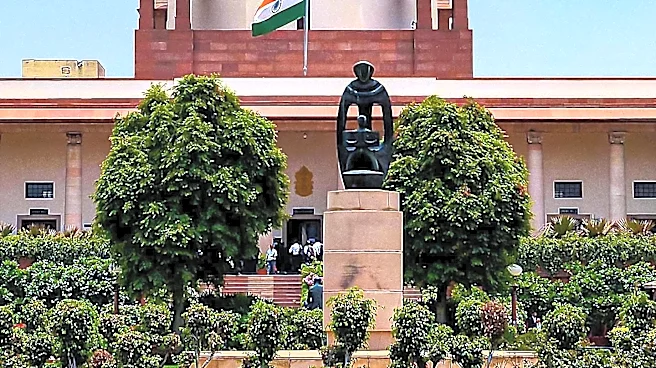
The Supreme Court of India has issued a directive to the state of Tamil Nadu to surrender 151 unfilled super-speciality medical seats to the All India Quota (AIQ) counselling pool. This decision comes as part of a landmark judgment aimed at addressing
the allocation and reservation policies in super-speciality medical education. The court's ruling mandates that 50% of these unfilled seats, after a reduction in the counselling percentile, must revert to the state, ensuring protection for in-service candidates. This verdict is seen as a significant step in resolving longstanding grievances of state-employed doctors regarding seat allocation. The decision also clarifies the procedural framework for percentile reduction in subsequent counselling rounds, ensuring an equitable distribution of vacant seats between the state and central authorities.
Why It's Important?
This ruling is crucial as it reinforces the judiciary's role in resolving disputes between state and central authorities over medical education governance. By mandating the surrender of unfilled seats to the AIQ, the Supreme Court ensures a transparent and merit-based allocation process, which is essential for maintaining national uniformity in postgraduate medical admissions. The decision also highlights the importance of balancing state-specific reservation policies with the centralised merit-based AIQ system. For Tamil Nadu, this ruling safeguards the interests of in-service candidates, ensuring they have equitable access to advanced training opportunities. The verdict may also incentivize states to strengthen their in-service training programs, thereby enhancing the overall quality of healthcare services.
What's Next?
Following the Supreme Court's directive, Tamil Nadu will need to comply with the order to surrender the unfilled seats to the AIQ. The Directorate General of Health Services (DGHS) will conduct further rounds of counselling to fill these seats. If the DGHS decides to reduce the percentile cut-off in subsequent rounds, 50% of the resulting vacant seats will revert to the state. This process will require close coordination between state and central agencies to ensure a smooth implementation. Additionally, the state government may need to review and possibly reform its in-service reservation policies to address any gaps and enhance participation in super-speciality examinations.
Beyond the Headlines
The Supreme Court's intervention underscores the ongoing challenges in balancing federalism and central oversight in India's healthcare governance. The ruling may set a precedent for other states facing similar issues, prompting a reevaluation of reservation policies and their impact on healthcare access. Furthermore, the decision highlights the need for improved training infrastructure and financial support for in-service doctors pursuing super-speciality courses. This could lead to long-term shifts in how states manage their medical education policies, potentially influencing the distribution of medical talent across the country.